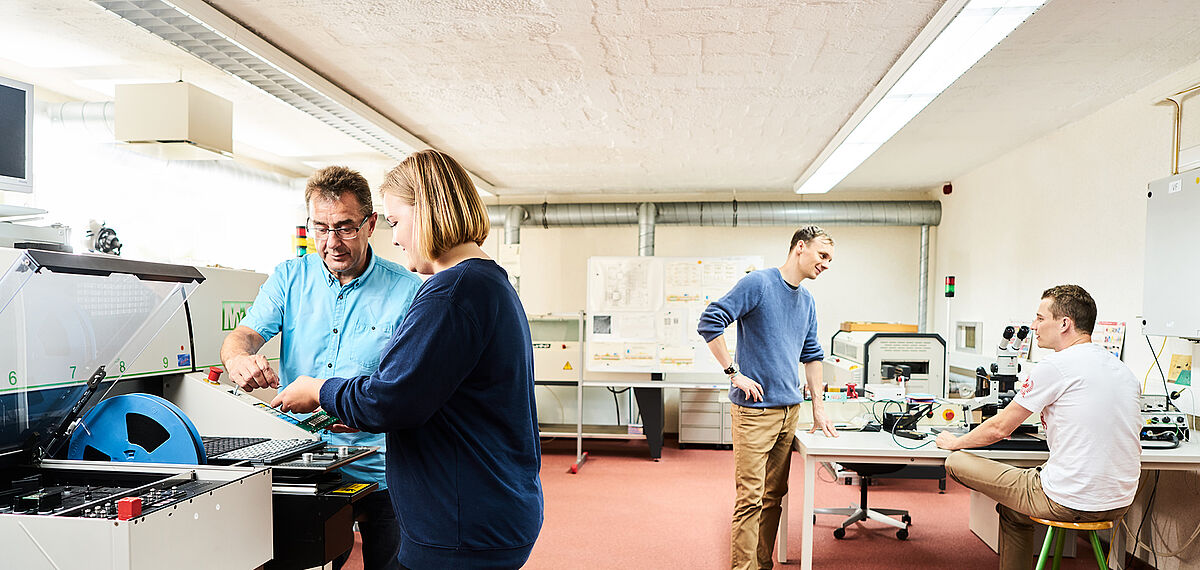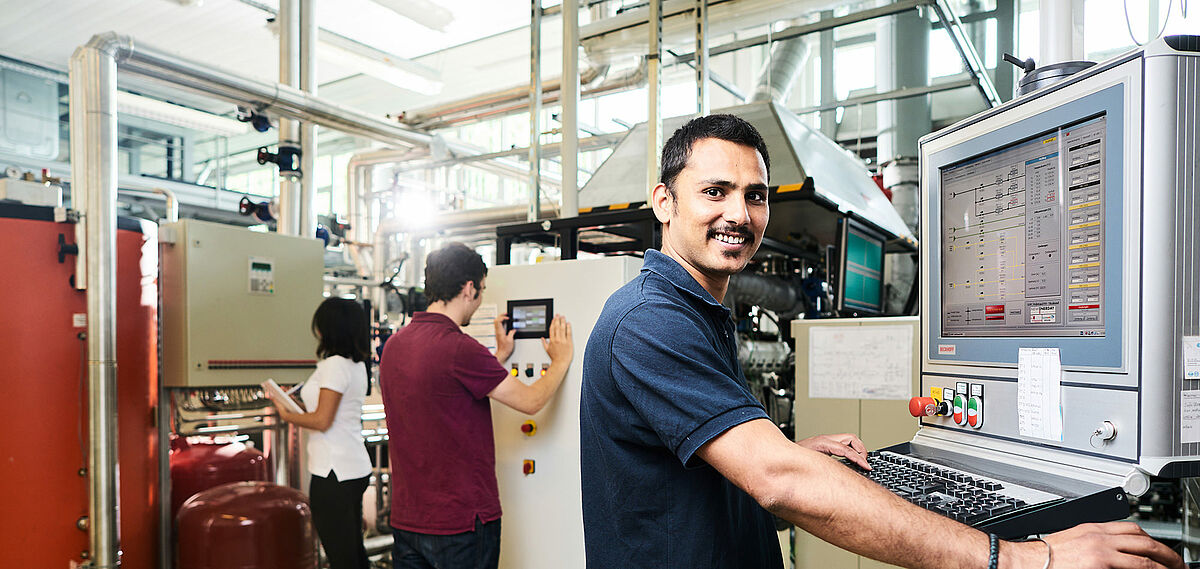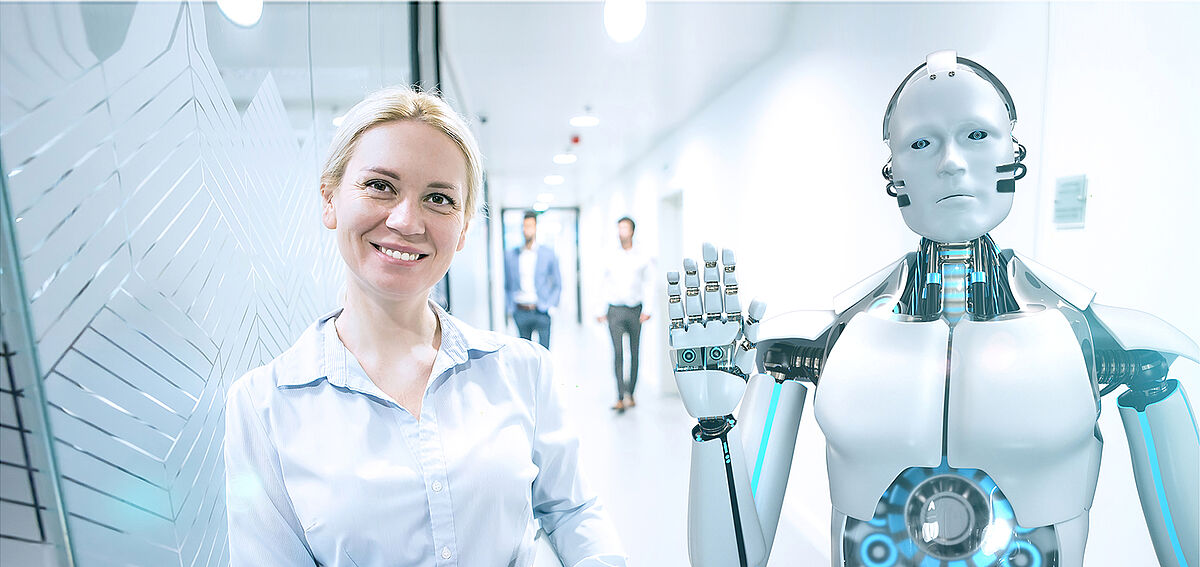
The energy transition, e-mobility, Industry 4.0 or the information superhighway – many of the pressing issues of our time can only be tackled with the help of electrical engineering specialists. If you’re interested in even just one of these applications in the fields of energy, automation or communications engineering, then you’ll be in good hands with an Electrical Engineering degree programme here! And what’s more: with a modern campus right on the Baltic Sea, there’s no shortage of fun either!
| Degree programme | Electrical Engineering – Bachelor’s (ETB) |
| Faculty | Faculty of Electrical Engineering and Computer Science |
| Start of programme | Winter semester |
| Admission | No entry requirements |
| Duration of programme | 7 semesters |
| Credit points | 210 ECTS |
| Qualification | Bachelor of Science (B.Sc.) |
| Language of instruction | German |
The Bachelor’s degree programme in “Electrical Engineering (B.Sc.)” was successfully accredited in 2023 until 30 September 2031.
Further information
- Secondary school leaving certificate (Abitur or equivalent) or
- College leaving certificate from a technical college (Fachhochschulreife or equivalent) or
- Master’s certificate under the apprenticeship system (Meisterabschluss) or equivalent professional vocational training examination or
- Entrance examination
Information for foreign applicants: Incoming
The next enrollment period for first-year students is for the winter semester. You can probably apply for the winter semester starting in mid-April.
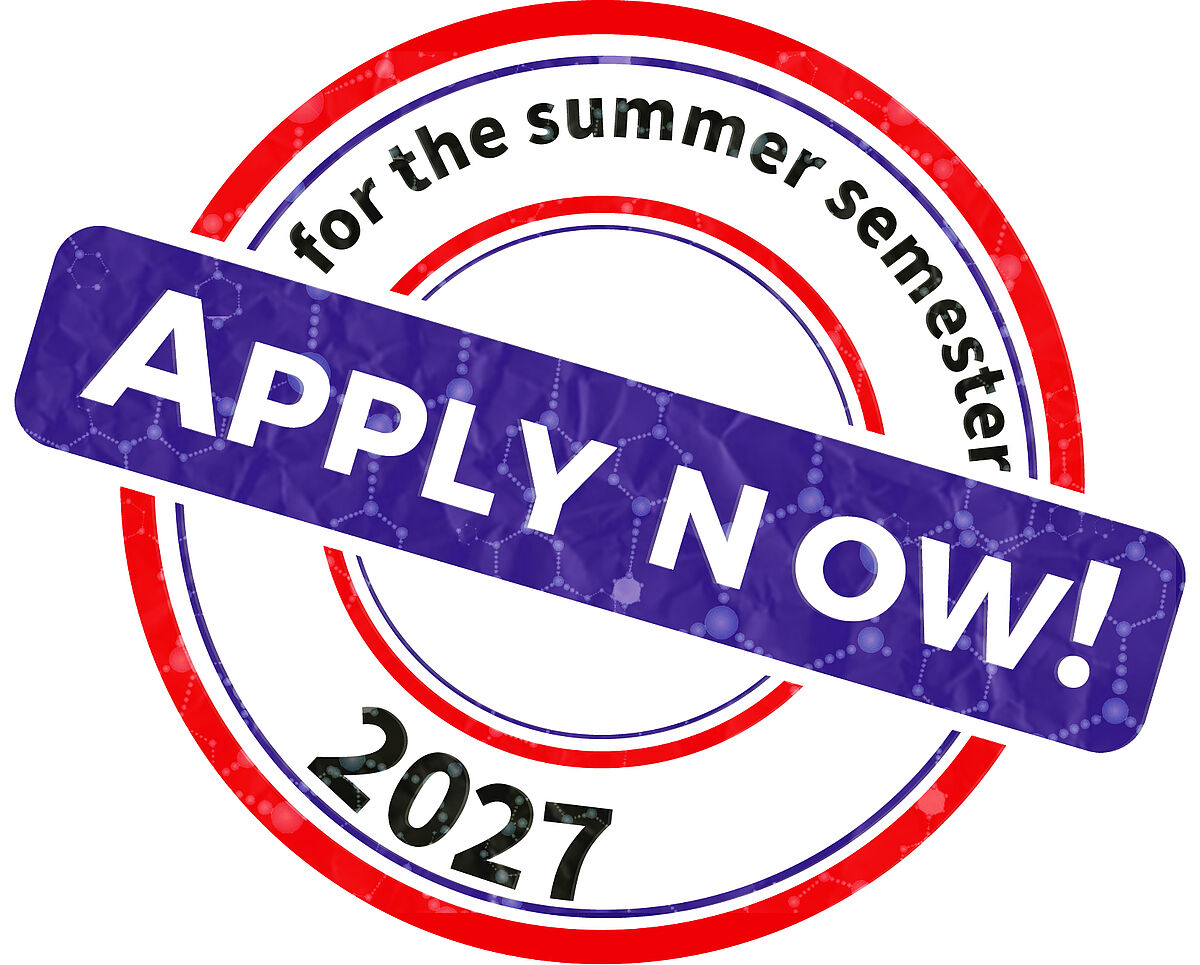
For the summer semester, enrollment is generally only available to students transferring from another university or program who have transferable credits and are entering a higher semester.
You are welcome to apply for the summer semester of 2027 from early November through February 28, 2027.
Link toOnline Application
Applications with foreign certificates must be submitted via uni-assist starting starting in early October:
Deadline for all non-EU applicants: November 30, 2026
Deadline for all EU applicants: February 28, 2027.
Please find more information here:incoming
As part of your 7-semester Bachelor’s degree programme, you can cover a wide range of subject areas or specialise in specific fields. Following the foundation stage, you can specialise in the fields of communications engineering, automation engineering or energy engineering.
High-speed or broadband data transmission, radio and fibre-optic links, and coding methods are specialised disciplines within telecommunications engineering.
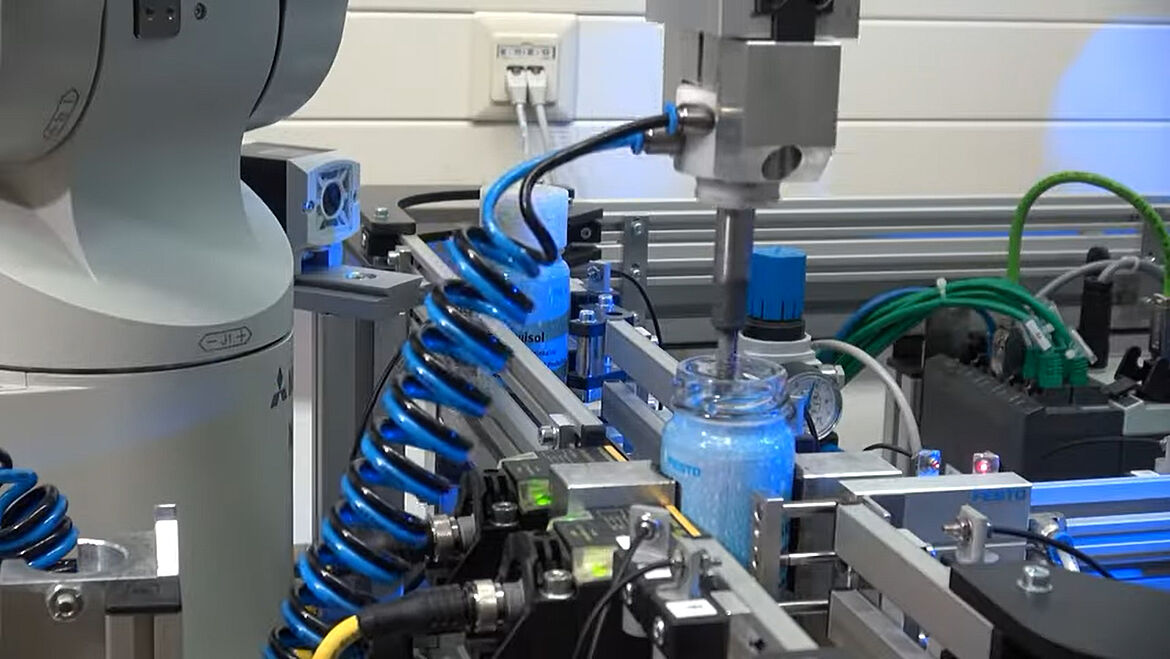
Automated production lines, automotive and robotic applications, and the programming of automotive electrical systems are all potential applications of automation engineering. The networking of virtually all devices involved in a process, enabling ever more controllable manufacturing processes, is summarised under the term ‘Industry 4.0’.
Decentralised energy generation, grid stability, electromobility and the storage of electrical energy are key topics for the future. With us, you will gain a comprehensive insight into electrical power generation and distribution, as well as electrical drive technology.
The strong practical focus – reflected, amongst other things, in a 12-week work placement – ensures you are ideally equipped for a career in industry.
Objectives
The aim of the Bachelor’s degree programme in Electrical Engineering is to provide training leading to a Bachelor of Science qualification, which is in high demand in industry, the business sector and the public sector. The programme optimally combines scientific fundamentals with advanced, application-oriented specialist knowledge. Examples of this include the work placements, the purposefully integrated practical laboratory training and early involvement in scientific research. Provided students achieve the required academic results, they can successfully progress to a Master’s programme, either nationally or internationally.
Career prospects
Career opportunities exist in both large companies and medium-sized industrial firms in the design, planning and development of electrical and electronic components, covering both the hardware and software sectors in equal measure. There is no longer any branch of industry today that can function without electrical engineering, electronics, computer technology and automation technology. As an electrical engineer, you can therefore quickly make your mark in almost all large companies and in many medium-sized businesses, regardless of your area of specialisation.
Opportunities in the labour market
No ivory-tower approach, but immediately applicable expertise of the highest standard: that is what makes our university education so attractive. The enormous demand for our graduates from the region’s business community is proof of this. But electrical engineers also have excellent prospects on the labour market beyond the region.
The standard duration of study is seven semesters, including the work-based learning components. During the first four semesters, you will acquire the necessary basic knowledge of mathematics and natural sciences through numerous practical experiments. This is followed by a phase of specialisation through interest-based elective modules, each of which comprises several courses covering the following subject areas:
- Automation technology
- Communications engineering
- Energy engineering
In the fifth and sixth semesters, you will deepen your knowledge in line with your own interests through compulsory and elective modules. The practical phase, which takes place in the seventh semester, lasts a total of 12 weeks and provides training in engineering practice within a company. You will complete your Bachelor’s degree with your Bachelor’s thesis at the end of the seventh semester.
What type of student are you?
The Bachelor’s degree programme in ‘Electrical Engineering’ can be studied on a full-time, part-time or work-integrated basis. This allows the programme to be flexibly tailored to suit individual needs, whether relating to family or work.
Insights into the degree programme
Curious? Then why not find a bit more inspiration here about studying electrical engineering?
Please note: Once you watch the video, data will be transmitted to Youtube/Google. For more information, see Google Privacy.