
(Kopie 2)
The new Digital Health Technology degree programme is a modernised and further developed version
of the former Medical Information Management degree programme.
Digital medicine and artificial intelligence are transforming the healthcare sector – the “Medical Information Management / eHealth” degree programme, the only one of its kind in Germany, focuses on the intersection between medicine, information processing and healthcare management. It provides you with the ideal foundation to be at the forefront as the healthcare sector is revolutionised by telemedicine, electronic patient records and the use of AI in clinical research and medical diagnostics. Not only is there a high demand for well-trained specialists, but the interesting and varied career opportunities are also compelling reasons to study “Medical Information Management / eHealth”.
Word has now spread amongst hospitals, health insurance providers, and the pharmaceutical and medical technology industries that Stralsund produces highly qualified graduates. Through our collaboration with numerous medical institutions as part of work placements and bachelor’s theses, we provide you with practical training that offers excellent career prospects.
| Degree programme | Medical Information Management/eHealth – Bachelor’s (MIMEB) |
| Faculty | Faculty of Electrical Engineering and Computer Science |
| Start of programme | Winter semester |
| Admission | No entry requirements |
| Duration of programme | 7 semesters |
| Credit points | 210 ECTS |
| Qualification | Bachelor of Science (B.Sc.) |
| Language of instruction | German |
The Bachelor’s degree programme in ‘Medical Information Management / eHealth’ was successfully accredited in 2023 until 30 September 2031.
Further information
Enrolment will no longer be available from the 2025/26 winter semester onwards. Please feel free to apply for our successor degree programme, Digital Health Technology.
The healthcare sector is one of the largest and fastest-growing sectors in Germany. One in ten people in employment now works in the healthcare sector. Potential lies, amongst other things, in the ever-increasing use of innovative information processing methods (eHealth), which enable new forms of care, particularly for older people and those with chronic illnesses.
Examples of this include telemedicine systems, in which information on previous illnesses, treatments, diagnostic findings and the progression of diseases is exchanged electronically between various stakeholders in the healthcare system.
Another example is home monitoring, whereby patients are cared for remotely in their own homes through the monitoring of vital signs. In addition to healthcare telematics, however, the management of medical information is also playing an increasingly important role in other areas.
These include
- clinical research
- medical decision-making based on artificial intelligence
- quality management of healthcare services
- the maintenance of epidemiological health registers, and
- the analysis and optimisation of service provision at health insurance funds, associations of panel doctors and hospital operators
Without information management, the efficient planning and control of healthcare processes is no longer conceivable. That is why we need you, in particular, as a specialist with interdisciplinary training at the interface between medicine, information processing and healthcare management.
Aims and career prospects
Your career prospects as a graduate of this interdisciplinary degree programme are extremely varied and cannot be described in detail here. For this reason, we shall mention here just a few examples of the roles undertaken by medical information managers in hospitals, industry and the healthcare sector:
- Planning, supporting and evaluating clinical trials (hospitals, the pharmaceutical and medical technology industries, contract research organisations)
- Design, configuration, user support and taking on managerial responsibility for the operation of hospital information systems (hospitals, university hospitals)
- Project and process management in healthcare facilities (hospitals, clinics, medical centres)
- Quality assurance in the healthcare sector (ministries of health, health authorities, clinics)
- Organisation and administration of data centres at pharmaceutical manufacturers (pharmaceutical industry)
- Design and management of epidemiological health registers, such as cancer registers (regional health authorities) and indication registers (e.g. endoprosthesis registers, etc.)
- Development of health information systems and medical technology IT components (software manufacturers, medical technology industry)
- Development and provision of medical knowledge databases as a basis for decision-making processes using artificial intelligence
Not only is there a demand for well-trained specialists, but the interesting and varied career opportunities are also good reasons to study Medical Information Management / eHealth. Stralsund University of Applied Sciences is the only higher education institution in Germany to offer a combination of Medical Information Management and eHealth within a single Bachelor’s degree programme, thereby providing you with a broad-based education and a wide range of career opportunities after graduation.
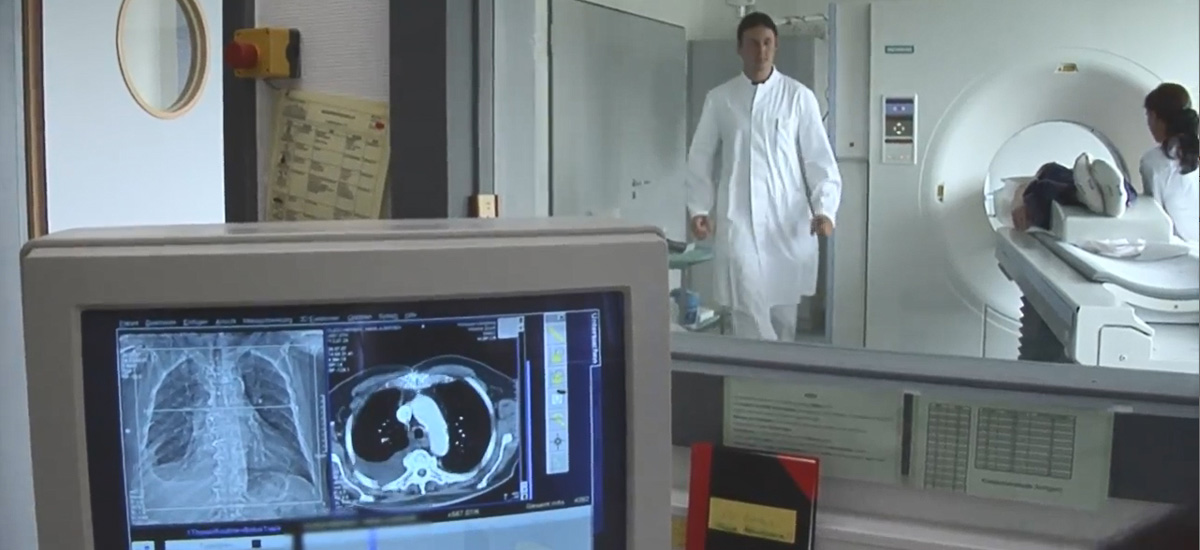
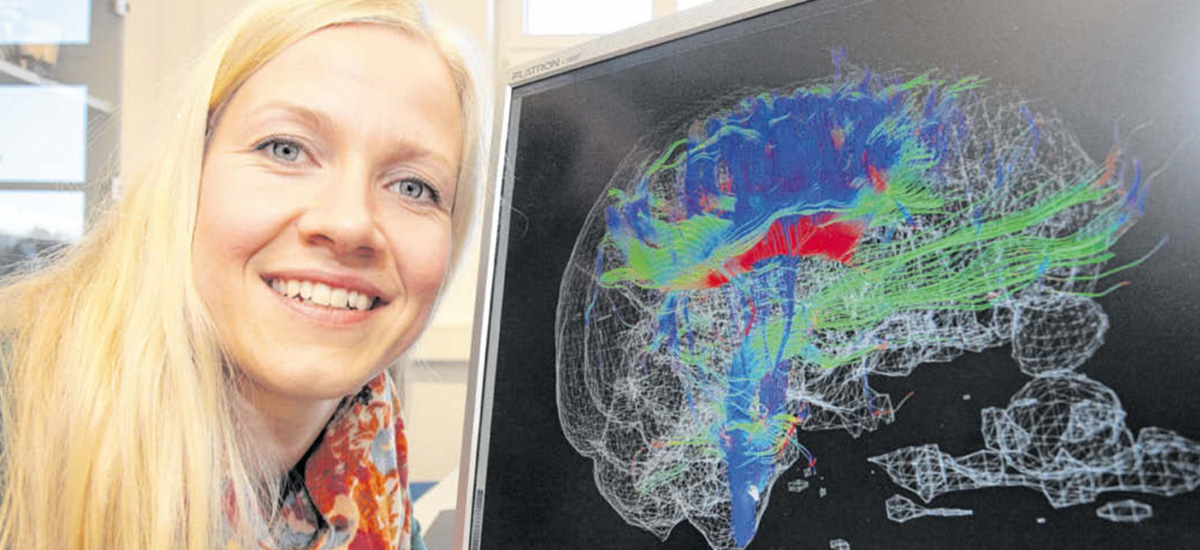
Examples of job profiles
Data managers organise and run data centres at pharmaceutical manufacturers or in hospitals. Their responsibilities include:
- Collecting, validating and storing data from clinical trials (e.g. for the authorisation of new medicines)
- Designing and setting up data management systems and databases
- Designing and providing case report forms (CRFs) or data entry interfaces
- Enforcing standards relating to quality control, data security and data protection
- Providing data for analysis (biometric data processing)
IT specialists plan, configure and operate information systems in hospitals. Their responsibilities include:
- Ensuring data security and data protection
- Supporting and training users
- Designing and procuring system components
- Connecting to telemedicine networks
- Managing applications, such as maintaining electronic patient records, capturing and storing radiological images, processing laboratory data, and analysing intensive care signal data
Medical controllers in hospitals manage and optimise all processes relating to documentation and coding, as well as internal hospital quality assurance. Their responsibilities include:
- Communication with the Medical Service of the Health Insurance Funds (MDK)
- Preparing data for budget negotiations
- Training and advising specialist departments on documentation and coding issues
- Organising internal hospital quality management measures
- Collecting and processing information for the preparation of quality reports
- Organisation of documentation within the framework of disease management programmes
The standard duration of study is 7 semesters, including the work-based learning components. In the first few semesters, you will acquire the fundamental knowledge that will enable you to understand and solve problems relating to information processing in the healthcare sector.
Building on this, you will acquire subject-specific knowledge in the field of eHealth and information processing in clinical trials.
The fifth semester takes the form of a work placement supervised by the university, carried out in selected hospitals, university hospitals, public health organisations (health insurance funds, public health authorities, associations of panel doctors, etc.) or companies in the pharmaceutical or medical technology sectors. In the sixth and seventh semesters, further practice-oriented training takes place, with the opportunity to specialise by choosing modules from a wide-ranging catalogue.
The seventh semester is largely devoted to writing a Bachelor’s thesis.
What type of student are you?
The Bachelor’s degree programme can be studied on a full-time, part-time or practice-oriented basis. This allows the programme to be flexibly tailored to your personal needs, whether these relate to family or work.
You can find an example of a part-time study plan here.

Professional associations
- The Professional Association for Documentation and Information Management in Medicine (DVMD)
- Federal Association for Healthcare IT
- German Society for Medical Informatics, Biometrics and Epidemiology (GMDS)
- Professional Association of Medical Informaticians e.V.
- Society for Telematics Applications of the Health Card mbH
- International Medical Informatics Association (IMIA)