


Hochschule Stralsund – University of Applied Sciences

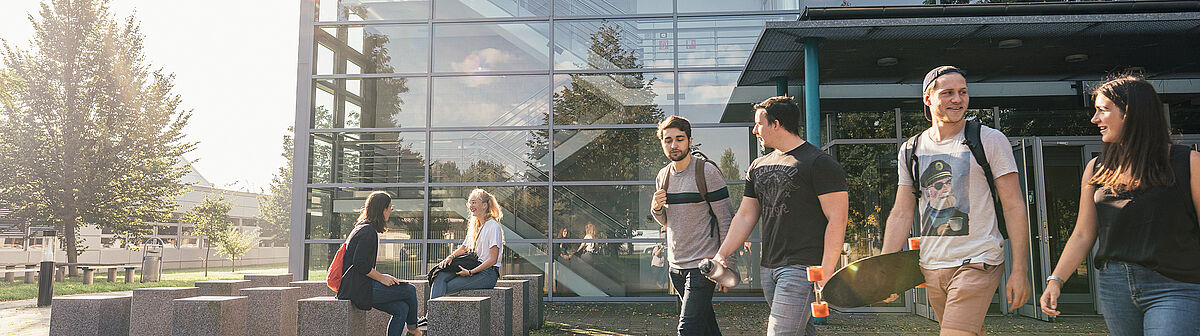
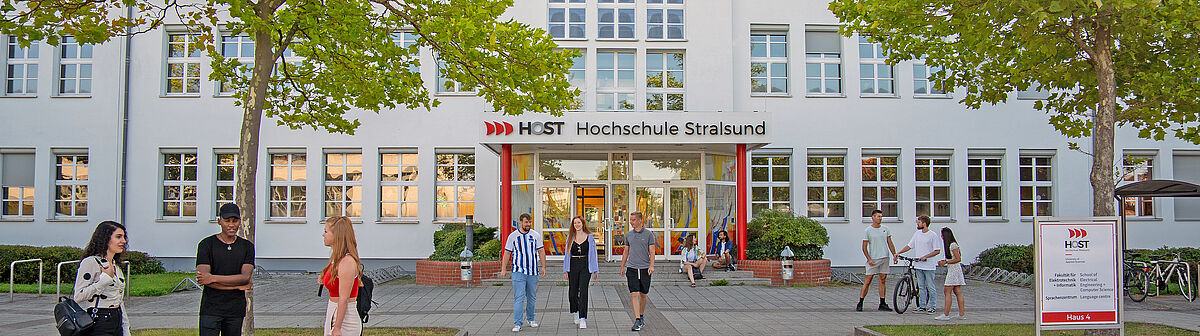
Stralsund University of Applied Sciences is a young and innovative campus university with a technical and economic profile. Future-oriented degree courses, strong cooperation with companies and an excellent student-to-staff ratio offer around 1,800 students the ideal conditions for successful studies and a promising career start. The university attracts attention with excellent research and contemporary teaching in the fields of electrical engineering, computer science, mechanical engineering and economics.

Button: Apply now for the winter semester 2026/27.

Welcome to HOST

What to study? And where to study? Not easy questions. Only you can answer the question of what to study.
We can help you answer the question of where to study: at Hochschule Stralsund - University of Applied Sciences.

We HOST your Studium

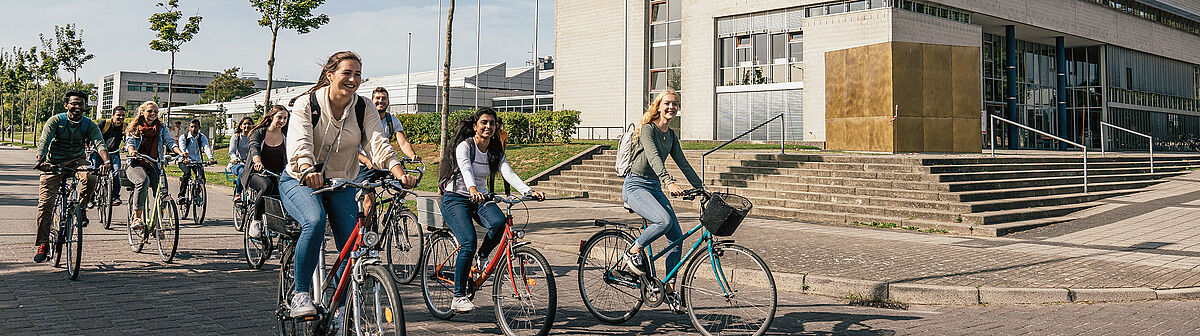
Stressed by big-city life or overcrowded lecture halls? Study at Stralsund University of Applied Sciences by the Baltic Sea with a hands-on approach, excellent career opportunities, and programs in business, technology, energy, and health. Apply now.

Living in Stralsund

You want to study in Stralsund?
Great, good decision!
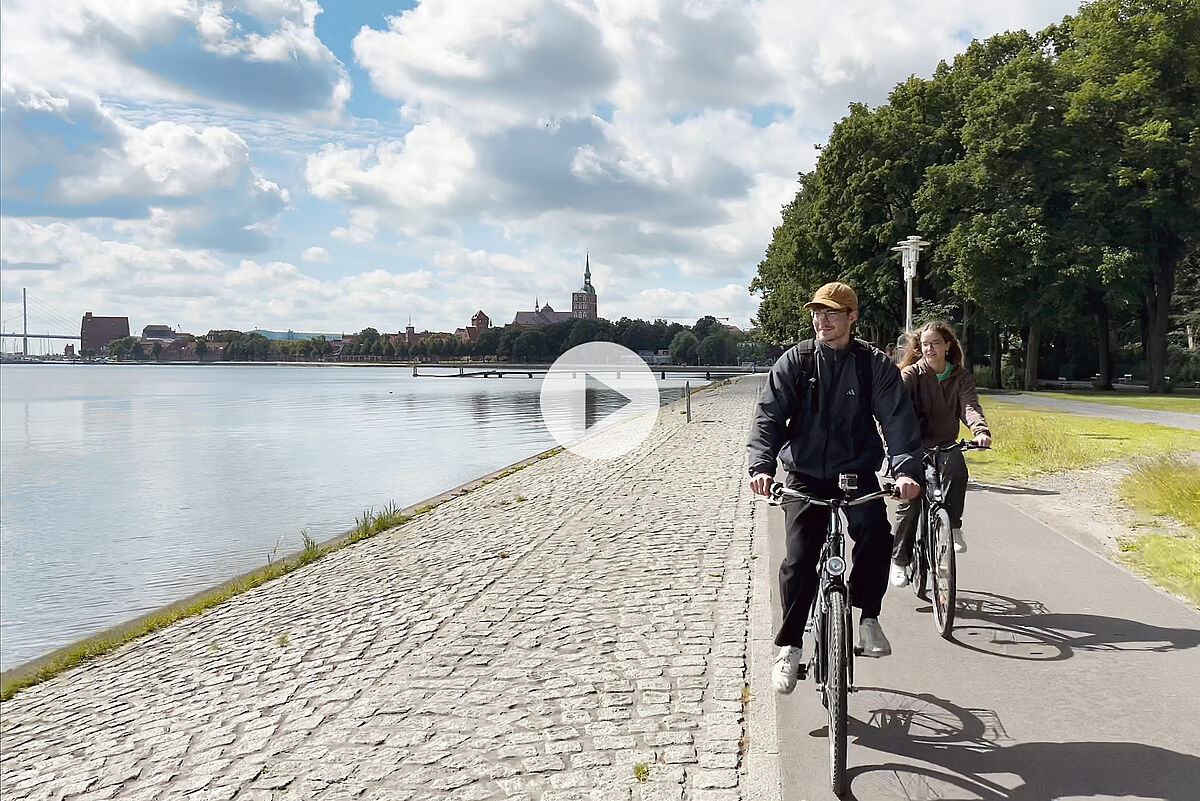
We'll be happy to help you find the right accommodation with first-hand tips from our students. Inexpensive, stylish, close to the water - that's possible in Stralsund!

News

"Scientific partnerships across continents"

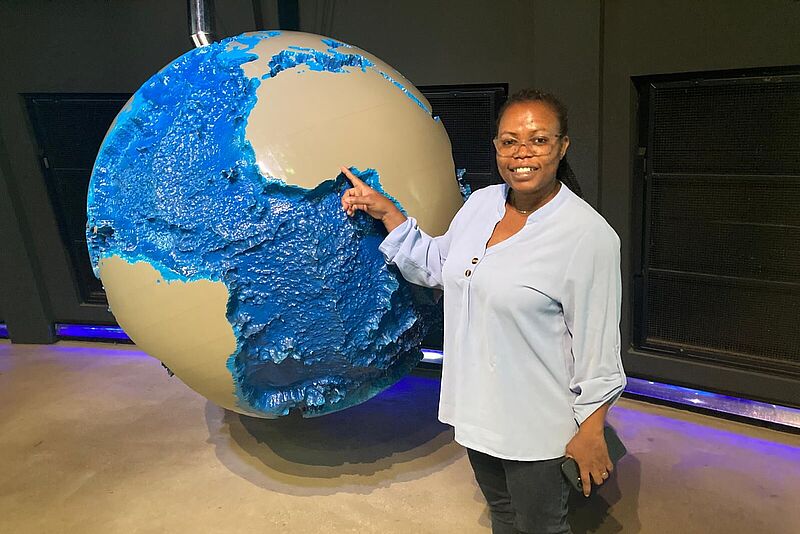
Visiting researcher Dr Latifatu Mohammed, Dr.-Ing., is working with colleagues at the IRES Institute on the building blocks of the global energy transition.

With Prof. Dr Johannes Gulden and Romy Sommer, whose hospitality and support she praises.
With her family: John Adjah and their children, Daniella and Zephaniah
At a workshop with academics and industry stakeholders
Latifatu Mohammed is leading a field study in a rural area to educate the local population about renewable alternatives to traditional wood-burning cookstoves.
Dr Latifatu Mohammed with the IRES team at Stralsund University of Applied Sciences

“I believe that scientific partnerships across continents are essential for addressing global challenges.” – So says Dr Latifatu Mohammed. The engineer from Ghana has been working as a visiting researcher at the Institute for Renewable Energy Systems (IRES) at Stralsund University of Applied Sciences since May and will remain there until August 2026. She came to HOST via the TWAS-DFG Cooperation Visits Programme from the CSIR–Institute of Industrial Research in Accra, Ghana. Her goals? – Many, including fostering growing cooperation between Ghana and Germany in the field of renewable energy and sustainable industrial development. 

“Growing up in Ghana, I witnessed how limited access to reliable and clean energy affects education, healthcare, industrial productivity, and livelihoods. This inspired me to pursue engineering and sustainable energy research.”At the CSIR Institute, Latifatu Mohammed heads the Department of Sustainable Energy Technologies as a Senior Research Scientist. She also serves as an Adjunct Lecturer at the Africa Centre of Excellence in Future Energies and Electrochemical Systems (ACE-FUELS) at the Federal University of Technology, Owerri, in Nigeria.

“My work combines research, innovation, teaching, project development, and capacity building in renewable energy, hydrogen technologies, batteries, sustainable industrial systems and circular economy.” In doing so, she has fulfilled the plan she had as a child. Latifatu Mohammed now has children of her own, Daniella and Zephaniah. Being away from them is not easy, even though her husband and mother look after them lovingly. But her children are also her driving force: “They remind me every day that the work we do today will shape the world they inherit tomorrow. As a mother and engineer, I want my children to grow up believing that science, engineering, and leadership are open to everyone, regardless of gender. I hope my journey demonstrates that women can successfully balance family life with scientific research and international collaboration.”

During her stay at Stralsund University of Applied Sciences, she took part in laboratory research, the development of research proposals, seminars, company visits, and discussions on future capacity-building programmes and joint postgraduate programmes.

Even during her stay, Dr Mohammed made a significant contribution to international cooperation: together with Stralsund University of Applied Sciences, she organised the virtual specialist seminar ‘Green Hydrogen Pathways: Ghana–Germany Collaboration for Sustainable Industrial Development’, which took place on 19 June.

Sixty-four participants from 31 organisations – including research institutions, industry, politics and development partners from Ghana, Germany and other countries – discussed the potential and pathways for a sustainable hydrogen economy in Ghana, as well as concrete opportunities for German-Ghanaian cooperation.

Prof. Dr Johannes Gulden, Head of the Institute for Renewable Energy Systems at Stralsund University of Applied Sciences, delivered the keynote address on current global developments in hydrogen, the German hydrogen strategy and opportunities for cooperation with Ghana. Rector Prof. Dr Ralph Sonntag emphasised Stralsund University of Applied Sciences’ commitment to international research partnerships as a contribution to the global energy transition.

The seminar resulted in initial ideas for joint pilot projects on green hydrogen, green ammonia and green methanol, and underlined the keen interest of all participants in long-term cooperation. A milestone for Dr Mohammend. “My goal is to develop affordable, locally appropriate technologies that support Africa's energy transition while contributing to global climate goals. I am particularly interested in integrating renewable energy with hydrogen technologies, advanced batteries, and fuel cells to create resilient energy systems that can support industries, agriculture, transportation, and rural communities. Through international collaboration, I hope to contribute to technology transfer, capacity building, and the development of future energy leaders.”

She sees many opportunities for future collaboration with Stralsund University of Applied Sciences. “During this visit we have already identified several areas for long-term collaboration. These include joint research on green hydrogen, fuel cell systems, renewable energy integration, biomass conversion, Power-to-X technologies, advanced batteries, and industrial decarbonization. We are also discussing the establishment of a Renewable Energy and Green Hydrogen Teaching Laboratory at CSIR-IIR to provide practical training for students, TVET trainees, technicians, and industry professionals. We also envision joint postgraduate programmes, co-supervision of MSc students, staff and student exchanges, summer schools, joint proposal development, and collaborative research funded by organizations such as DFG, GIZ, Horizon Europe, and other international programmes. For Ghana and Germany, this partnership offers opportunities to strengthen scientific cooperation, develop skilled professionals, accelerate technology transfer, and contribute to the global clean energy transition while supporting sustainable industrial development in both countries.”
"Scientific partnerships across continents"

Visiting researcher Dr Latifatu Mohammed, Dr.-Ing., is working with colleagues at the IRES Institute on the building blocks of the global energy transition.

With Prof. Dr Johannes Gulden and Romy Sommer, whose hospitality and support she praises.
With her family: John Adjah and their children, Daniella and Zephaniah
At a workshop with academics and industry stakeholders
Latifatu Mohammed is leading a field study in a rural area to educate the local population about renewable alternatives to traditional wood-burning cookstoves.
Dr Latifatu Mohammed with the IRES team at Stralsund University of Applied Sciences

“I believe that scientific partnerships across continents are essential for addressing global challenges.” – So says Dr Latifatu Mohammed. The engineer from Ghana has been working as a visiting researcher at the Institute for Renewable Energy Systems (IRES) at Stralsund University of Applied Sciences since May and will remain there until August 2026. She came to HOST via the TWAS-DFG Cooperation Visits Programme from the CSIR–Institute of Industrial Research in Accra, Ghana. Her goals? – Many, including fostering growing cooperation between Ghana and Germany in the field of renewable energy and sustainable industrial development. 

“Growing up in Ghana, I witnessed how limited access to reliable and clean energy affects education, healthcare, industrial productivity, and livelihoods. This inspired me to pursue engineering and sustainable energy research.”At the CSIR Institute, Latifatu Mohammed heads the Department of Sustainable Energy Technologies as a Senior Research Scientist. She also serves as an Adjunct Lecturer at the Africa Centre of Excellence in Future Energies and Electrochemical Systems (ACE-FUELS) at the Federal University of Technology, Owerri, in Nigeria.

“My work combines research, innovation, teaching, project development, and capacity building in renewable energy, hydrogen technologies, batteries, sustainable industrial systems and circular economy.” In doing so, she has fulfilled the plan she had as a child. Latifatu Mohammed now has children of her own, Daniella and Zephaniah. Being away from them is not easy, even though her husband and mother look after them lovingly. But her children are also her driving force: “They remind me every day that the work we do today will shape the world they inherit tomorrow. As a mother and engineer, I want my children to grow up believing that science, engineering, and leadership are open to everyone, regardless of gender. I hope my journey demonstrates that women can successfully balance family life with scientific research and international collaboration.”

During her stay at Stralsund University of Applied Sciences, she took part in laboratory research, the development of research proposals, seminars, company visits, and discussions on future capacity-building programmes and joint postgraduate programmes.

Even during her stay, Dr Mohammed made a significant contribution to international cooperation: together with Stralsund University of Applied Sciences, she organised the virtual specialist seminar ‘Green Hydrogen Pathways: Ghana–Germany Collaboration for Sustainable Industrial Development’, which took place on 19 June.

Sixty-four participants from 31 organisations – including research institutions, industry, politics and development partners from Ghana, Germany and other countries – discussed the potential and pathways for a sustainable hydrogen economy in Ghana, as well as concrete opportunities for German-Ghanaian cooperation.

Prof. Dr Johannes Gulden, Head of the Institute for Renewable Energy Systems at Stralsund University of Applied Sciences, delivered the keynote address on current global developments in hydrogen, the German hydrogen strategy and opportunities for cooperation with Ghana. Rector Prof. Dr Ralph Sonntag emphasised Stralsund University of Applied Sciences’ commitment to international research partnerships as a contribution to the global energy transition.

The seminar resulted in initial ideas for joint pilot projects on green hydrogen, green ammonia and green methanol, and underlined the keen interest of all participants in long-term cooperation. A milestone for Dr Mohammend. “My goal is to develop affordable, locally appropriate technologies that support Africa's energy transition while contributing to global climate goals. I am particularly interested in integrating renewable energy with hydrogen technologies, advanced batteries, and fuel cells to create resilient energy systems that can support industries, agriculture, transportation, and rural communities. Through international collaboration, I hope to contribute to technology transfer, capacity building, and the development of future energy leaders.”

She sees many opportunities for future collaboration with Stralsund University of Applied Sciences. “During this visit we have already identified several areas for long-term collaboration. These include joint research on green hydrogen, fuel cell systems, renewable energy integration, biomass conversion, Power-to-X technologies, advanced batteries, and industrial decarbonization. We are also discussing the establishment of a Renewable Energy and Green Hydrogen Teaching Laboratory at CSIR-IIR to provide practical training for students, TVET trainees, technicians, and industry professionals. We also envision joint postgraduate programmes, co-supervision of MSc students, staff and student exchanges, summer schools, joint proposal development, and collaborative research funded by organizations such as DFG, GIZ, Horizon Europe, and other international programmes. For Ghana and Germany, this partnership offers opportunities to strengthen scientific cooperation, develop skilled professionals, accelerate technology transfer, and contribute to the global clean energy transition while supporting sustainable industrial development in both countries.”

"Scientific partnerships across continents"

Visiting researcher Dr Latifatu Mohammed, Dr.-Ing., is working with colleagues at the IRES Institute on the building blocks of the global energy transition.

With Prof. Dr Johannes Gulden and Romy Sommer, whose hospitality and support she praises.
With her family: John Adjah and their children, Daniella and Zephaniah
At a workshop with academics and industry stakeholders
Latifatu Mohammed is leading a field study in a rural area to educate the local population about renewable alternatives to traditional wood-burning cookstoves.
Dr Latifatu Mohammed with the IRES team at Stralsund University of Applied Sciences

“I believe that scientific partnerships across continents are essential for addressing global challenges.” – So says Dr Latifatu Mohammed. The engineer from Ghana has been working as a visiting researcher at the Institute for Renewable Energy Systems (IRES) at Stralsund University of Applied Sciences since May and will remain there until August 2026. She came to HOST via the TWAS-DFG Cooperation Visits Programme from the CSIR–Institute of Industrial Research in Accra, Ghana. Her goals? – Many, including fostering growing cooperation between Ghana and Germany in the field of renewable energy and sustainable industrial development. 

“Growing up in Ghana, I witnessed how limited access to reliable and clean energy affects education, healthcare, industrial productivity, and livelihoods. This inspired me to pursue engineering and sustainable energy research.”At the CSIR Institute, Latifatu Mohammed heads the Department of Sustainable Energy Technologies as a Senior Research Scientist. She also serves as an Adjunct Lecturer at the Africa Centre of Excellence in Future Energies and Electrochemical Systems (ACE-FUELS) at the Federal University of Technology, Owerri, in Nigeria.

“My work combines research, innovation, teaching, project development, and capacity building in renewable energy, hydrogen technologies, batteries, sustainable industrial systems and circular economy.” In doing so, she has fulfilled the plan she had as a child. Latifatu Mohammed now has children of her own, Daniella and Zephaniah. Being away from them is not easy, even though her husband and mother look after them lovingly. But her children are also her driving force: “They remind me every day that the work we do today will shape the world they inherit tomorrow. As a mother and engineer, I want my children to grow up believing that science, engineering, and leadership are open to everyone, regardless of gender. I hope my journey demonstrates that women can successfully balance family life with scientific research and international collaboration.”

During her stay at Stralsund University of Applied Sciences, she took part in laboratory research, the development of research proposals, seminars, company visits, and discussions on future capacity-building programmes and joint postgraduate programmes.

Even during her stay, Dr Mohammed made a significant contribution to international cooperation: together with Stralsund University of Applied Sciences, she organised the virtual specialist seminar ‘Green Hydrogen Pathways: Ghana–Germany Collaboration for Sustainable Industrial Development’, which took place on 19 June.

Sixty-four participants from 31 organisations – including research institutions, industry, politics and development partners from Ghana, Germany and other countries – discussed the potential and pathways for a sustainable hydrogen economy in Ghana, as well as concrete opportunities for German-Ghanaian cooperation.

Prof. Dr Johannes Gulden, Head of the Institute for Renewable Energy Systems at Stralsund University of Applied Sciences, delivered the keynote address on current global developments in hydrogen, the German hydrogen strategy and opportunities for cooperation with Ghana. Rector Prof. Dr Ralph Sonntag emphasised Stralsund University of Applied Sciences’ commitment to international research partnerships as a contribution to the global energy transition.

The seminar resulted in initial ideas for joint pilot projects on green hydrogen, green ammonia and green methanol, and underlined the keen interest of all participants in long-term cooperation. A milestone for Dr Mohammend. “My goal is to develop affordable, locally appropriate technologies that support Africa's energy transition while contributing to global climate goals. I am particularly interested in integrating renewable energy with hydrogen technologies, advanced batteries, and fuel cells to create resilient energy systems that can support industries, agriculture, transportation, and rural communities. Through international collaboration, I hope to contribute to technology transfer, capacity building, and the development of future energy leaders.”

She sees many opportunities for future collaboration with Stralsund University of Applied Sciences. “During this visit we have already identified several areas for long-term collaboration. These include joint research on green hydrogen, fuel cell systems, renewable energy integration, biomass conversion, Power-to-X technologies, advanced batteries, and industrial decarbonization. We are also discussing the establishment of a Renewable Energy and Green Hydrogen Teaching Laboratory at CSIR-IIR to provide practical training for students, TVET trainees, technicians, and industry professionals. We also envision joint postgraduate programmes, co-supervision of MSc students, staff and student exchanges, summer schools, joint proposal development, and collaborative research funded by organizations such as DFG, GIZ, Horizon Europe, and other international programmes. For Ghana and Germany, this partnership offers opportunities to strengthen scientific cooperation, develop skilled professionals, accelerate technology transfer, and contribute to the global clean energy transition while supporting sustainable industrial development in both countries.”

Current numbers

Symbols and figures for graduates, students, nationalities, distance to the beach and electricity generated on campus