Are you passionate about technology? - As a mechanical engineer, you can shape the world in a positive way! The course prepares you to shape the entire process of developing new technology, from the initial idea to designs, cost calculations, construction and the optimisation of devices and processes. This knowledge will be relevant for almost everything that surrounds us, for the energy transition, the development of means of transport and in interaction with artificial intelligence. The degree programme provides a good foundation and then offers the opportunity to specialise with specialisations (mobility, energy systems, modern production, health technology). This gives you the chance to develop your own strengths and interests during your Bachelor's degree. Regardless of which specialisation you choose, you will remain close to practice: in project work, on excursions, in practice-oriented laboratory work in small learning groups and, above all, in your final thesis.
| Degree programme | Mechanical Engineering Bachelor (MBB) |
| Faculty | Mechanical Engineering |
| Start | winter semester |
| Admission | free of admission |
| Duration | 7 semesters |
| Credit points | 210 ECTS |
| Degree | Bachelor of Engineering (B.Eng.) |
| Lecture language | German |
In March 2021, the Accreditation Council re-accredited the Bachelor of Mechanical Engineering until August 2028.
Further information can be found here.
- Secondary school leaving certificate (Abitur or equivalent) or
- College leaving certificate from a technical college (Fachhochschulreife or equivalent) or
- Master’s certificate under the apprenticeship system (Meisterabschluss) or equivalent professional vocational training examination or
- Entrance examination
Information for foreign applicants: Incoming
The next enrollment period for first-year students is for the winter semester. You can probably apply for the winter semester starting in mid-April.
For the summer semester, enrollment is generally only available to students transferring from another university or program who have transferable credits and are entering a higher semester.
You are welcome to apply for the summer semester of 2027 from early November through February 28, 2027.
Link toOnline Application
Applications with foreign certificates must be submitted via uni-assist starting starting in early October:
Deadline for all non-EU applicants: November 30, 2026
Deadline for all EU applicants: February 28, 2027.
Please find more information here:incoming
We are looking forward to your application for the winter semester from 18 April until 13 September 2026.
Link to Online Application
Deadlines for foreign applicants*: incoming
The Bachelor's degree programme in Mechanical Engineering initially aims to teach the fundamentals of science and engineering in a sound but application-oriented way. Since the winter semester 2021, four specialisations are available: Mobility, Energy Systems, Modern Production or Health Technology. However, you only decide on one of these specialisations at the end of the third semester, allowing you to tailor your studies to your personal preferences.
The Mobility specialisation provides in-depth knowledge of applications and technology for transporting people and goods locally, regionally and globally. Current developments resulting from changing resources, technologies and needs are addressed.
The Energy Systems profile aims to impart comprehensive knowledge of conventional and future methods of energy generation, storage and conversion as well as energy utilisation and the conservation of resources and the environment.
The Modern Production specialisation aims to qualify you in the production and processing of metals, plastics, functional ceramics and special materials. You will also acquire knowledge of production management, logistics and quality management.
The Healthcare Technology specialisation focuses on the design and adaptation of medical technology assistance systems that serve to improve and maintain quality of life and provide therapeutic support.
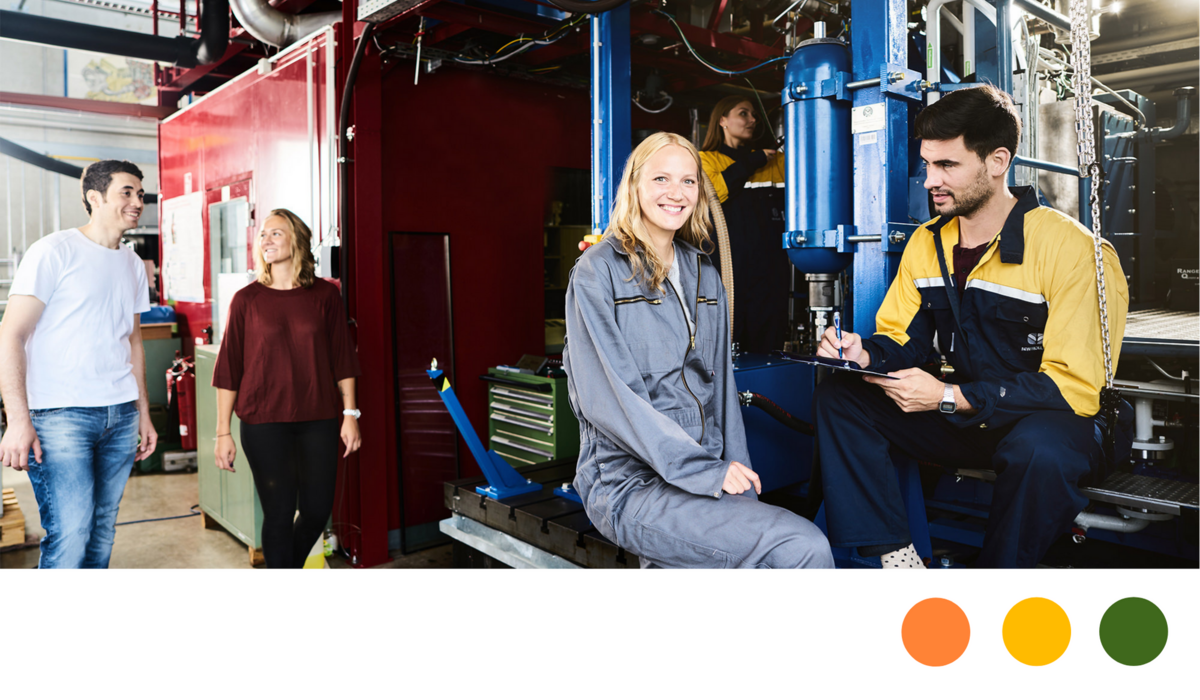
In addition to the technical qualification, laboratory experiments and exercises in small working groups as well as the extensive project phases help to make the programme challenging.
In the final semester, the practical phase of at least 12 weeks and the Bachelor's thesis effectively prepare students for their future careers.
In addition to direct career entry, the Bachelor of Engineering degree also offers the opportunity to continue the university education in a thematically related Master's programme.
The historically grown diversity and complexity, the high pace of innovation and the positive economic development in companies result in a continuing need for mechanical engineers with both scientific and practical training. This degree course is designed to meet this need by offering students a wide range of employment opportunities. However, highly specialized companies, research facilities and public institutions are increasingly demanding engineers with specialist knowledge in various categories. Depending on the chosen specialization, your focus will be on mobility, energy systems, modern production or health technology. The fields of research and development, system planning, consulting, project planning, design, production planning, manufacturing and assembly, commissioning, operational organization and monitoring, quality assurance, testing and customer service are only a partial guide to the numerous career opportunities.
A degree in mechanical engineering opens up an extremely broad range of employment opportunities.
The fields of research and development, system planning, consulting, project planning, design, work preparation, production and assembly, commissioning, operational organization and monitoring, quality assurance, testing and customer service are only an incomplete guide to the wide range of possible applications.
In addition to the option of studying the Bachelor's degree course in Mechanical Engineering full-time, the course can alternatively be studied as a degree course with in-depth practical experience or as a part-time course. This allows the course to be flexibly tailored to personal needs for family and career.
• Curriculum (from winter semester 2025/ 26)
• Specialisation elective modules (from winter semester 2025/ 26)
• Diploma Supplement (German, from winter semester 2025/26)
• Diploma Supplement (English, from winter semester 2025/ 26)
Stralsund University of Applied Sciences is characterised by its strong practical focus. State-of-the-art, industry-standard laboratories, lecturers with extensive professional experience, and close collaboration with businesses create ideal conditions for study. Around 90 per cent of final-year projects are carried out in industry or in industry-related research – often on an international scale and in English. Thanks to these close links, many Bachelor’s graduates move straight into professional life upon leaving the university, already with a job contract in hand.
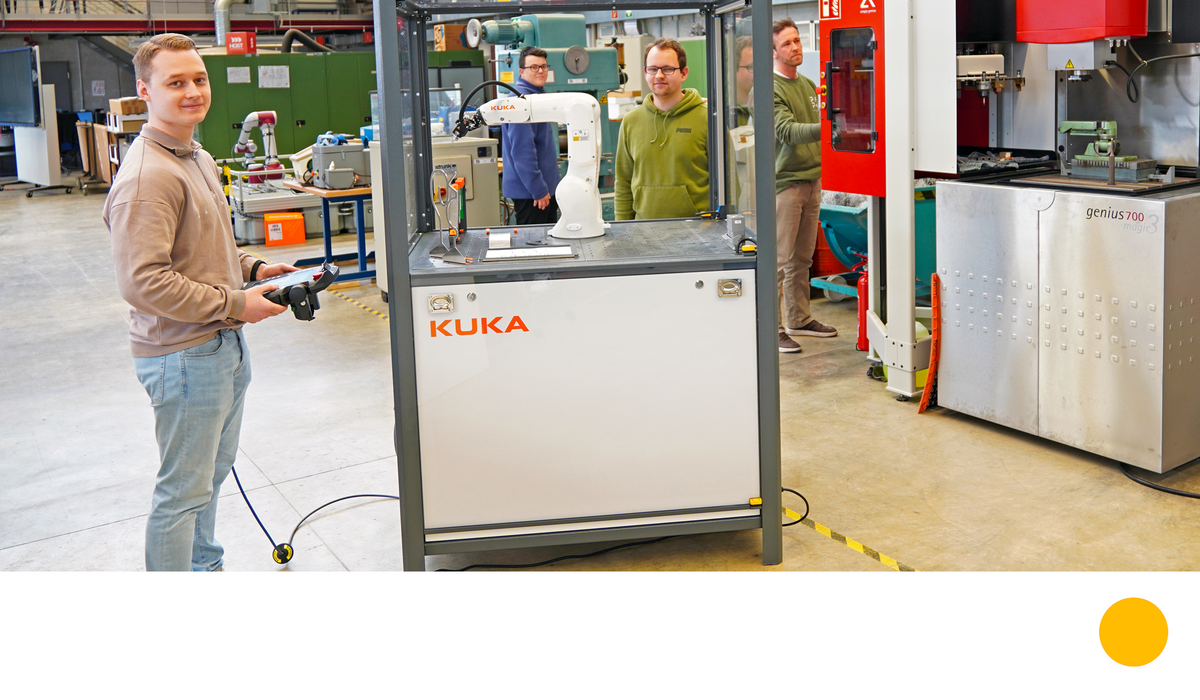
The university has superbly equipped laboratories that provide state-of-the-art technology for teaching and research. These include, amongst other things, a ship simulator, a large diesel engine, a nano-computed tomography system and a 3D metal printing (SLM) facility. The technical equipment forms an integral part of the courses and enables students to consolidate their theoretical knowledge directly through practical applications.
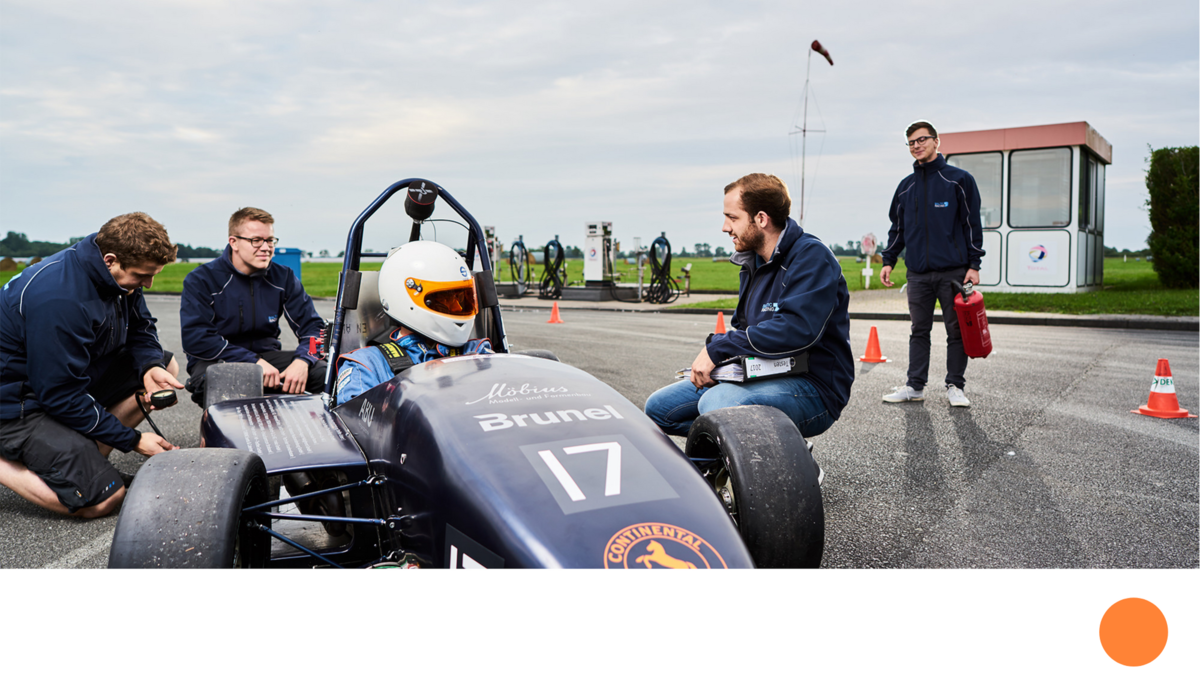
The student teams at Stralsund University of Applied Sciences combine innovation, technology and team spirit. Baltic Racing is developing a racing car, MariTeam Racing a racing motorbike, Sundspace a rocket and Thaiger-H2-Racing a hydrogen-powered vehicle for sustainability races – practical, creative and forward-looking.