




Hochschule Stralsund – University of Applied Sciences

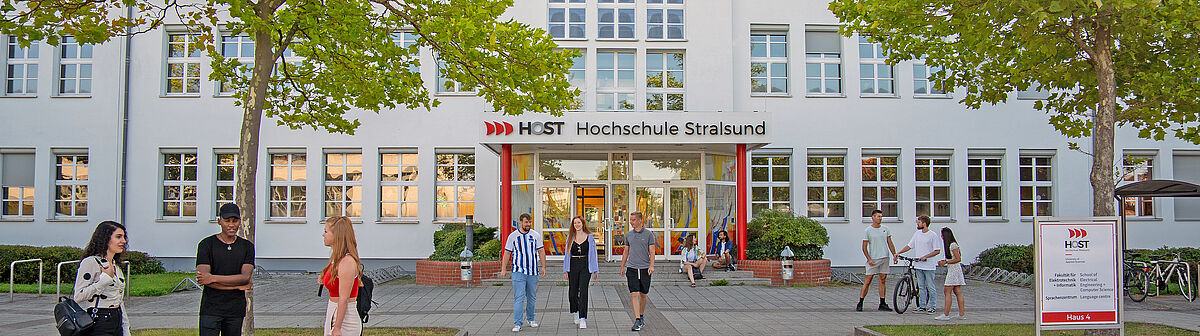
Stralsund University of Applied Sciences is a young and innovative campus university with a technical and economic profile. Future-oriented degree courses, strong cooperation with companies and an excellent student-to-staff ratio offer around 1,800 students the ideal conditions for successful studies and a promising career start. The university attracts attention with excellent research and contemporary teaching in the fields of electrical engineering, computer science, mechanical engineering and economics.

Button: Apply now for the winter semester 2026/27.

Welcome to HOST

What to study? And where to study? Not easy questions. Only you can answer the question of what to study.
We can help you answer the question of where to study: at Hochschule Stralsund - University of Applied Sciences.

We HOST your Studium

Stressed by big-city life or overcrowded lecture halls? Study at Stralsund University of Applied Sciences by the Baltic Sea with a hands-on approach, excellent career opportunities, and programs in business, technology, energy, and health. Apply now.

Living in Stralsund

You want to study in Stralsund?
Great, good decision!
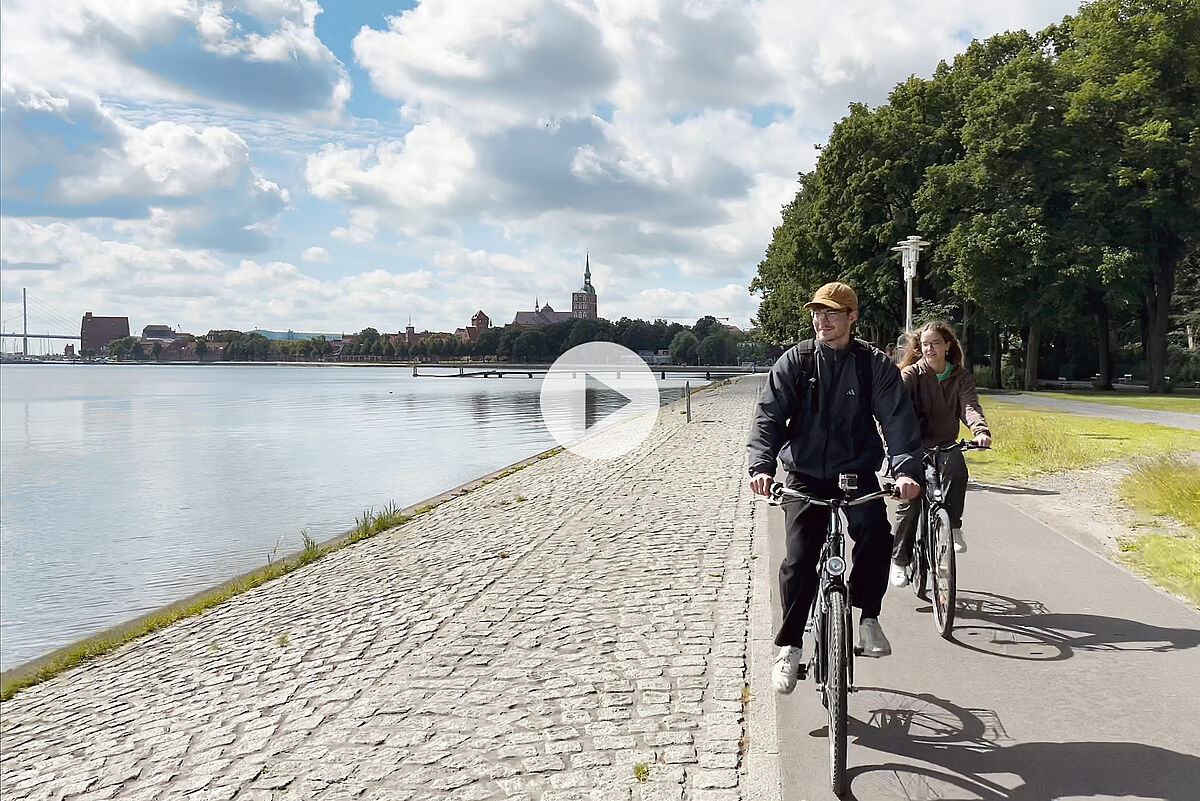
We'll be happy to help you find the right accommodation with first-hand tips from our students. Inexpensive, stylish, close to the water - that's possible in Stralsund!

News

EUNICoast: A commitment to social engagement

The EUNICoast Alliance has published a joint position and commitment paper which defines community engagement – social engagement – as a key institutional remit of its member universities.

The EUNICoast Alliance has published a joint position and commitment paper which defines community engagement – social engagement – as a key institutional remit of its member universities. The document, drawn up by the Community Engagement Commission, sets out shared guiding principles, specific commitments and policy recommendations for the further development of the Alliance.

The starting point is the special role of universities in island, port and coastal regions. They are rooted in places where land and sea meet, where different habitats, economic systems and communities converge. The areas surrounding them are facing rising sea levels, shrinking populations and fragile economic systems. Yet it is precisely in these places that new approaches to shared challenges can be developed, which can then be shared with the rest of Europe. EUNICoast’s partner universities are located in these areas. This location is both a responsibility and a resource. Community engagement has often been viewed as a supplementary task within the higher education sector. An article on the Alliance’s website explains: 

“However, this proximity has not always translated into a partnership. Social engagement in higher education has long been regarded as a secondary matter: as a public event, as a reporting obligation, as something to be dealt with after the actual work is done. The gap between what universities claim about themselves and what society experiences is structural in nature and is embedded in evaluation systems, funding cycles and career incentives that prioritise research output over social engagement.”

With the new voluntary commitment by the partner universities of EUNICoast, which includes Stralsund University of Applied Sciences, social engagement is to become a core mission that shapes research, teaching and institutional development in equal measure.

The document is based on three pillars: territorial anchoring, reciprocity and transformation. Six guiding principles give these pillars institutional form: reciprocity between higher education institutions and local communities; anchoring in the specific reality of each region; epistemic pluralism; inclusion and equity in participation, institutional autonomy coupled with accountability, and a long-term commitment to relationships rather than a project-based approach focused on short cycles.

Eight operational commitments are designed to put these principles into practice. Each partner institution is expected to develop an institutional plan for societal engagement, establish and maintain sustainable relationships with local stakeholders, integrate community-based learning into its teaching programmes, train staff in participatory approaches, create shared platforms for ongoing dialogue with communities, document and evaluate the outcomes of partnerships, allocate specific resources to social engagement activities, and contribute to political advocacy for structural change so that civil society engagement is recognised by higher education systems.

The declaration is binding on all partner universities, from the Baltic Sea to the Caribbean. It is currently being implemented at all partner universities and will shape the alliance’s work until 2027 and beyond.

EUNICoast, the European University of Islands, Ports and Coastal Regions, brings together thirteen higher education institutions committed to delivering real benefits to the communities in their local areas. 
The full declaration is available for download here. 

EUNICoast: A commitment to social engagement

The EUNICoast Alliance has published a joint position and commitment paper which defines community engagement – social engagement – as a key institutional remit of its member universities.

The EUNICoast Alliance has published a joint position and commitment paper which defines community engagement – social engagement – as a key institutional remit of its member universities. The document, drawn up by the Community Engagement Commission, sets out shared guiding principles, specific commitments and policy recommendations for the further development of the Alliance.

The starting point is the special role of universities in island, port and coastal regions. They are rooted in places where land and sea meet, where different habitats, economic systems and communities converge. The areas surrounding them are facing rising sea levels, shrinking populations and fragile economic systems. Yet it is precisely in these places that new approaches to shared challenges can be developed, which can then be shared with the rest of Europe. EUNICoast’s partner universities are located in these areas. This location is both a responsibility and a resource. Community engagement has often been viewed as a supplementary task within the higher education sector. An article on the Alliance’s website explains: 

“However, this proximity has not always translated into a partnership. Social engagement in higher education has long been regarded as a secondary matter: as a public event, as a reporting obligation, as something to be dealt with after the actual work is done. The gap between what universities claim about themselves and what society experiences is structural in nature and is embedded in evaluation systems, funding cycles and career incentives that prioritise research output over social engagement.”

With the new voluntary commitment by the partner universities of EUNICoast, which includes Stralsund University of Applied Sciences, social engagement is to become a core mission that shapes research, teaching and institutional development in equal measure.

The document is based on three pillars: territorial anchoring, reciprocity and transformation. Six guiding principles give these pillars institutional form: reciprocity between higher education institutions and local communities; anchoring in the specific reality of each region; epistemic pluralism; inclusion and equity in participation, institutional autonomy coupled with accountability, and a long-term commitment to relationships rather than a project-based approach focused on short cycles.

Eight operational commitments are designed to put these principles into practice. Each partner institution is expected to develop an institutional plan for societal engagement, establish and maintain sustainable relationships with local stakeholders, integrate community-based learning into its teaching programmes, train staff in participatory approaches, create shared platforms for ongoing dialogue with communities, document and evaluate the outcomes of partnerships, allocate specific resources to social engagement activities, and contribute to political advocacy for structural change so that civil society engagement is recognised by higher education systems.

The declaration is binding on all partner universities, from the Baltic Sea to the Caribbean. It is currently being implemented at all partner universities and will shape the alliance’s work until 2027 and beyond.

EUNICoast, the European University of Islands, Ports and Coastal Regions, brings together thirteen higher education institutions committed to delivering real benefits to the communities in their local areas. 

The full declaration is available for download here. 

EUNICoast: A commitment to social engagement

The EUNICoast Alliance has published a joint position and commitment paper which defines community engagement – social engagement – as a key institutional remit of its member universities.

The EUNICoast Alliance has published a joint position and commitment paper which defines community engagement – social engagement – as a key institutional remit of its member universities. The document, drawn up by the Community Engagement Commission, sets out shared guiding principles, specific commitments and policy recommendations for the further development of the Alliance.

The starting point is the special role of universities in island, port and coastal regions. They are rooted in places where land and sea meet, where different habitats, economic systems and communities converge. The areas surrounding them are facing rising sea levels, shrinking populations and fragile economic systems. Yet it is precisely in these places that new approaches to shared challenges can be developed, which can then be shared with the rest of Europe. EUNICoast’s partner universities are located in these areas. This location is both a responsibility and a resource. Community engagement has often been viewed as a supplementary task within the higher education sector. An article on the Alliance’s website explains: 

“However, this proximity has not always translated into a partnership. Social engagement in higher education has long been regarded as a secondary matter: as a public event, as a reporting obligation, as something to be dealt with after the actual work is done. The gap between what universities claim about themselves and what society experiences is structural in nature and is embedded in evaluation systems, funding cycles and career incentives that prioritise research output over social engagement.”

With the new voluntary commitment by the partner universities of EUNICoast, which includes Stralsund University of Applied Sciences, social engagement is to become a core mission that shapes research, teaching and institutional development in equal measure.

The document is based on three pillars: territorial anchoring, reciprocity and transformation. Six guiding principles give these pillars institutional form: reciprocity between higher education institutions and local communities; anchoring in the specific reality of each region; epistemic pluralism; inclusion and equity in participation, institutional autonomy coupled with accountability, and a long-term commitment to relationships rather than a project-based approach focused on short cycles.

Eight operational commitments are designed to put these principles into practice. Each partner institution is expected to develop an institutional plan for societal engagement, establish and maintain sustainable relationships with local stakeholders, integrate community-based learning into its teaching programmes, train staff in participatory approaches, create shared platforms for ongoing dialogue with communities, document and evaluate the outcomes of partnerships, allocate specific resources to social engagement activities, and contribute to political advocacy for structural change so that civil society engagement is recognised by higher education systems.

The declaration is binding on all partner universities, from the Baltic Sea to the Caribbean. It is currently being implemented at all partner universities and will shape the alliance’s work until 2027 and beyond.

EUNICoast, the European University of Islands, Ports and Coastal Regions, brings together thirteen higher education institutions committed to delivering real benefits to the communities in their local areas. 

The full declaration is available for download here. 

Current numbers

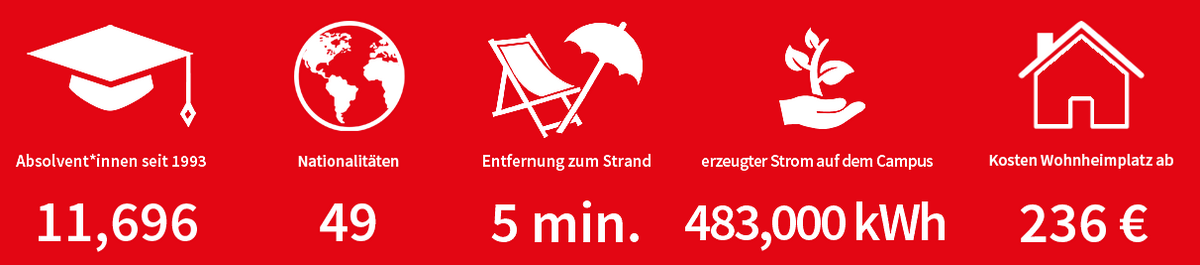
Symbols and figures for graduates, students, nationalities, distance to the beach and electricity generated on campus