

Please note: Once you watch the video, data will be transmitted to Youtube/Google. For more information, see Google Privacy.
The powertrain encompasses all subsystems that generate drive torque and ultimately transmit it to the road via the wheels.
In conventional designs with an internal combustion engine, the powertrain consists of a transmission (and, in the case of manual transmissions, a clutch), a differential, drive shafts, and tires. In hybrid or all-electric powertrains, some components (e.g., clutch, transmission, etc.) are eliminated due to the electric motor.
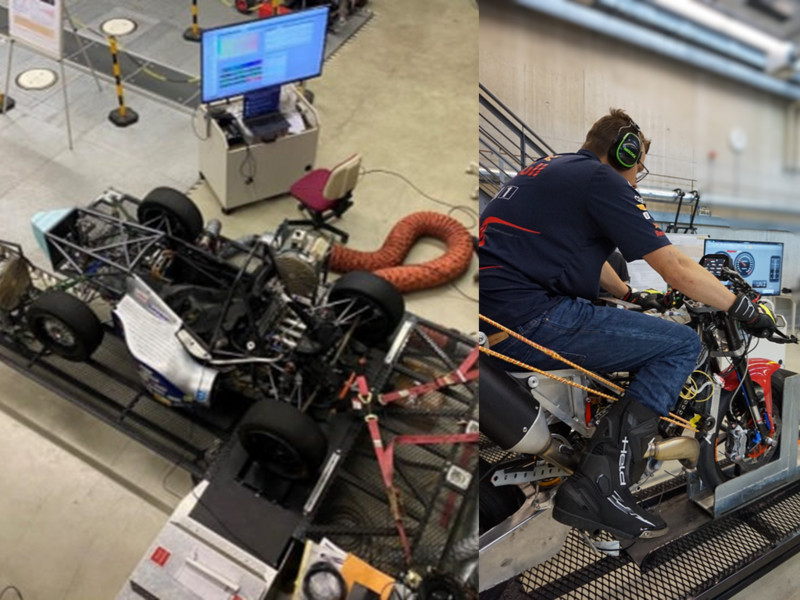
The following test facilities are available for investigating the various powertrain concepts.
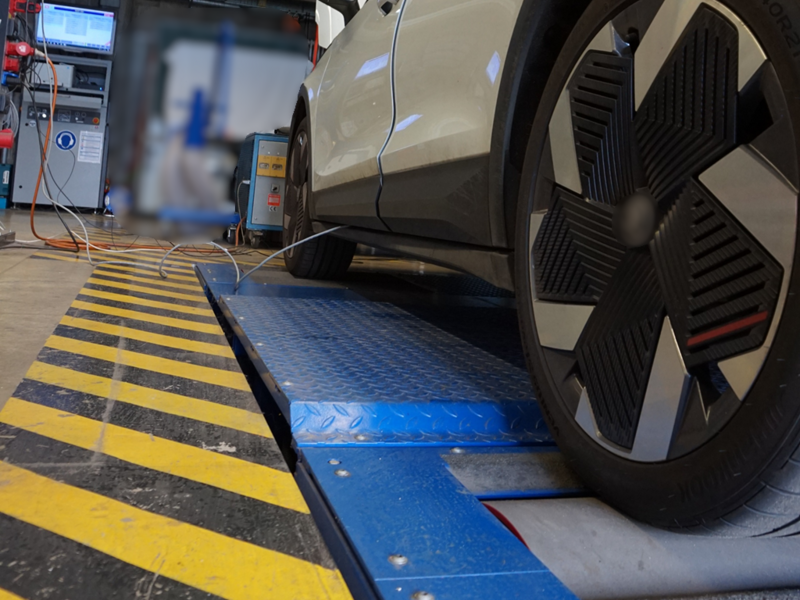
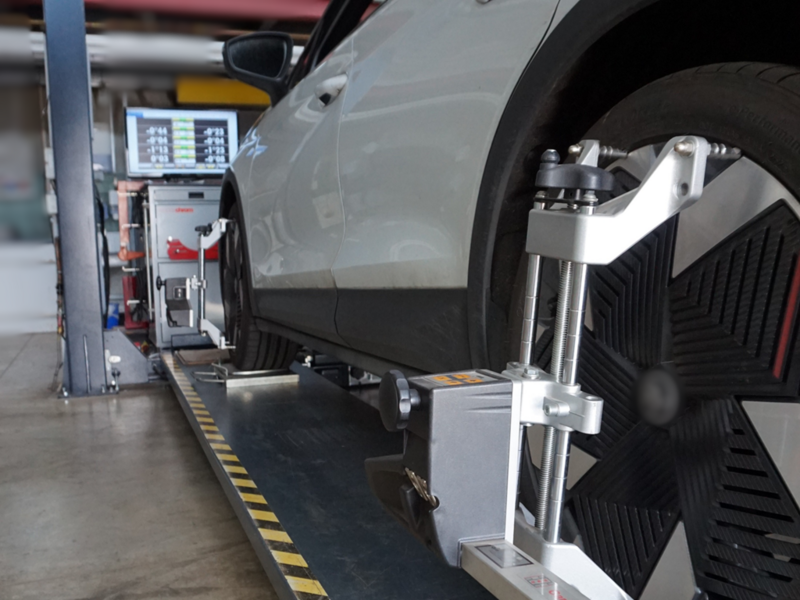
The Chassis section covers the various types of axle design and their adjustment parameters, as well as their impact on ride comfort and handling dynamics.
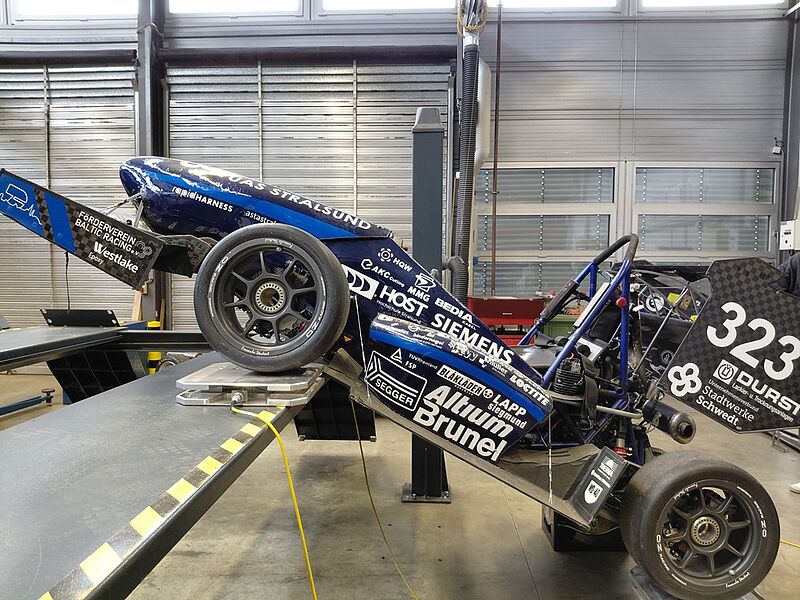
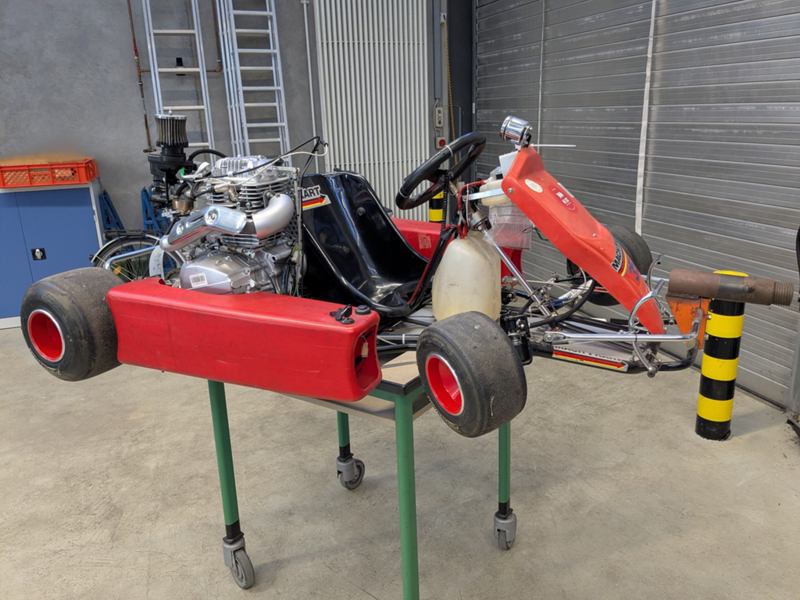
Four-post test bench

- tyre-coupled road simulator
- assessment of ride comfort, noise and vibration measurement
- conducting fatigue strength tests
- cylinder stroke: 150 mm (±75 mm)
- rated force: 35 kN per cylinder
- max. piston speed: 2.5 m/s
- max. piston acceleration: 32 g
- control cycle rate: up to 10 kHz
- 8-channel analogue measurement module for recording further relevant parameters
Hexagon Adams Car
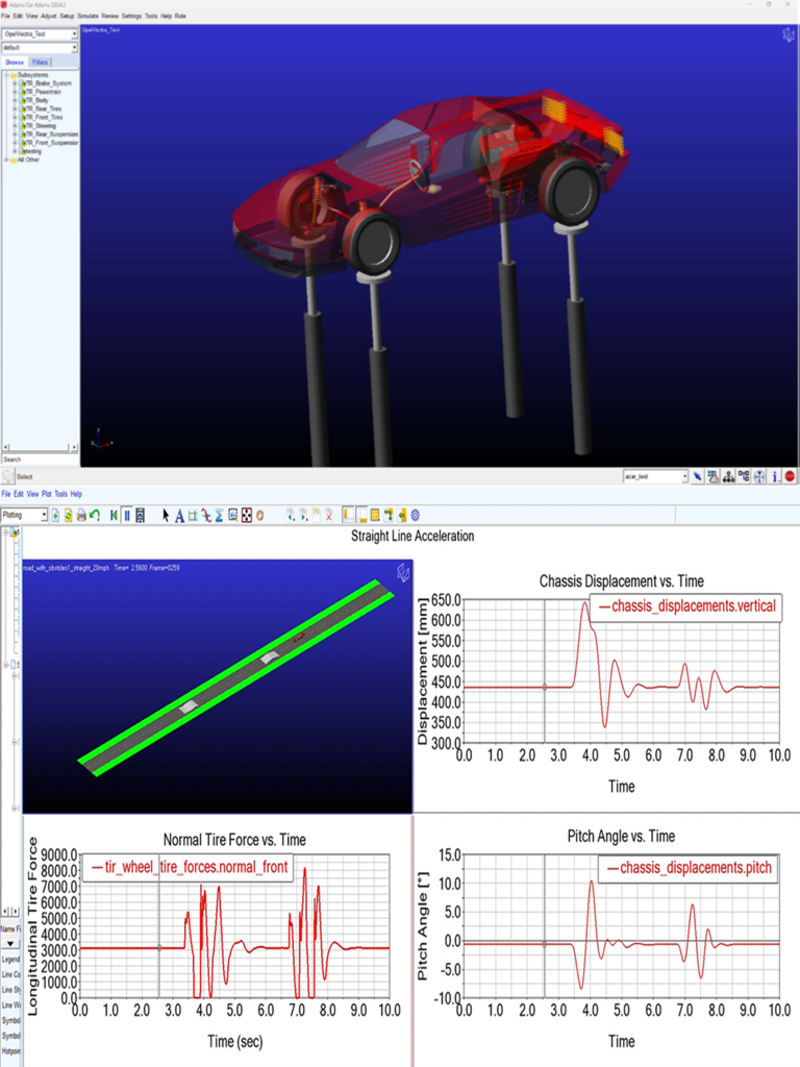
- simulation software for vehicle dynamics
- creation of complete virtual vehicle prototypes as an alternative to costly physical prototypes
- virtual test track for investigating handling behaviour under a wide variety of road conditions and during various driving manoeuvres (slalom, lane changes, braking, cornering)
- component analysis to optimise detailed subsystems such as wheel suspensions, steering systems, powertrains and damping systems
- K&C analyses (kinematics and compliance tests) to investigate the behaviour of, for example, the suspension when subjected to forces whilst cornering or braking
- assessment of NVH (Noise, Vibration, Harshness) – noise and vibrations as quality indicators of overall ride comfort
IPG Automotive Simulation Software

- IPG CarMaker as a simulation solution for the development process of, amongst other things, passenger cars
- virtual driving tests to assess critical scenarios
- functional optimisation of systems such as damping, chassis or steering
- IPG Kinematics, utilising the fundamentals of existing models and templates for vehicle axles to parameterise and simulate the suspension
- IPG MotocycleMaker for the simulation, integration and testing of various powertrain concepts for two-wheelers
- virtual design and validation of vehicle geometry, chassis and brakes