
The additive manufacturing and digital product development laboratory provides practical training in key engineering concepts relating to modern manufacturing technologies. It enables students to systematically develop and analyse digital models and then bring them to life using additive manufacturing processes. In this way, the theoretical principles of product development become clearly understandable through experimental investigations. In particular, design processes, material behaviour and manufacturing strategies can be demonstrated and evaluated here under real-world conditions. Furthermore, the laboratory offers the opportunity to use digital development tools, to investigate the factors influencing them and to experience the entire workflow from the initial idea to the finished component.

Please note: Once you watch the video, data will be transmitted to Youtube/Google. For more information, see Google Privacy.
Prusa MK3S+ with MMU2S
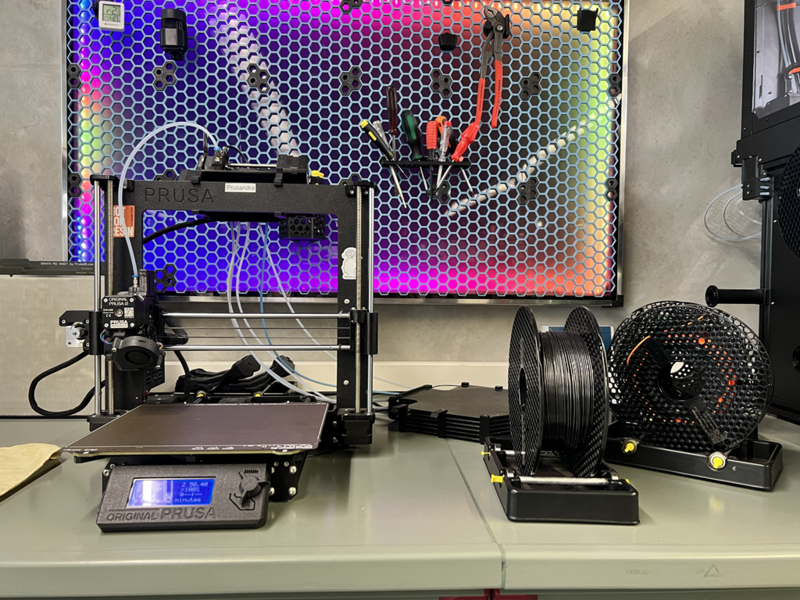
- build volume: 250 × 210 × 210 mm
- layer thickness: approx. 0.05 to 0.35 mm
- manufacturing principle: FFF (Fused Filament Fabrication)
- kinematics: Cartesian system
- reliable Multi-Material Upgrade (MMU) with up to five filaments for complex components
- tried-and-tested print platform with high process stability and reproducible quality
- wide range of materials, including engineering polymers such as PETG and ASA
- open system enables easy maintenance and cost-effective spare parts
Prusa MK4 with MMU3
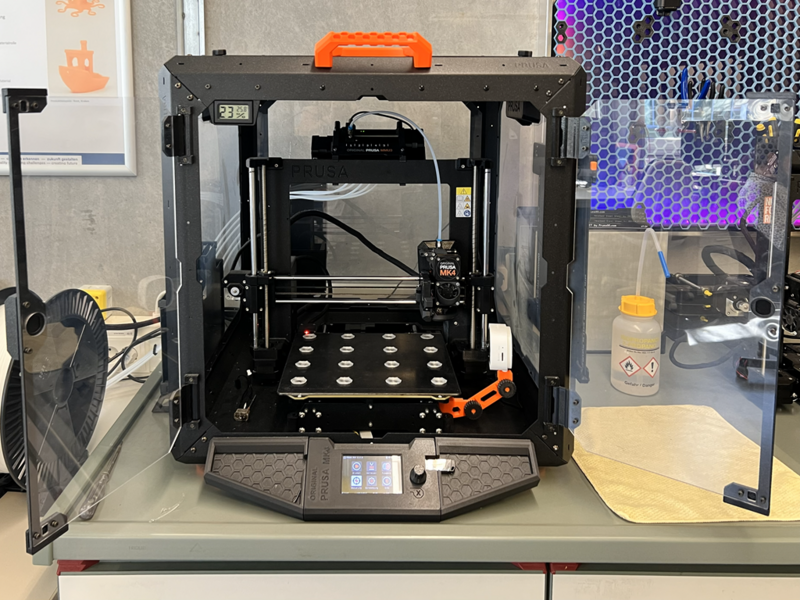
- build volume: 250 × 210 × 220 mm
- layer thickness: approx. 0.05 to 0.30 mm
- manufacturing principle: FFF
- kinematics: Cartesian
- higher print speeds whilst maintaining consistent part quality
- significantly improved multi-material upgrade with greater reliability and shorter changeover times
- new print head with precise sensor technology for an accurate first layer without manual adjustment
- enhanced connectivity for network operation and remote monitoring
- improved user guidance reduces set-up time and minimises operating errors
- future-proof platform with modular upgrades
Prusa Core One

- build volume: approx. 250 × 220 × 270 mm
- layer thickness: approx. 0.05 to 0.30 mm
- manufacturing principle: FFF
- kinematics: CoreXY
- CoreXY kinematics for high dynamics and reduced production times
- enclosed build volume enables stable processing of high-temperature engineering materials such as ABS, PA or PPS
- precise motion control for tight tolerances and smooth surfaces
- reduced vibrations result in improved dimensional accuracy for complex geometries
Prusa XL with five tool heads
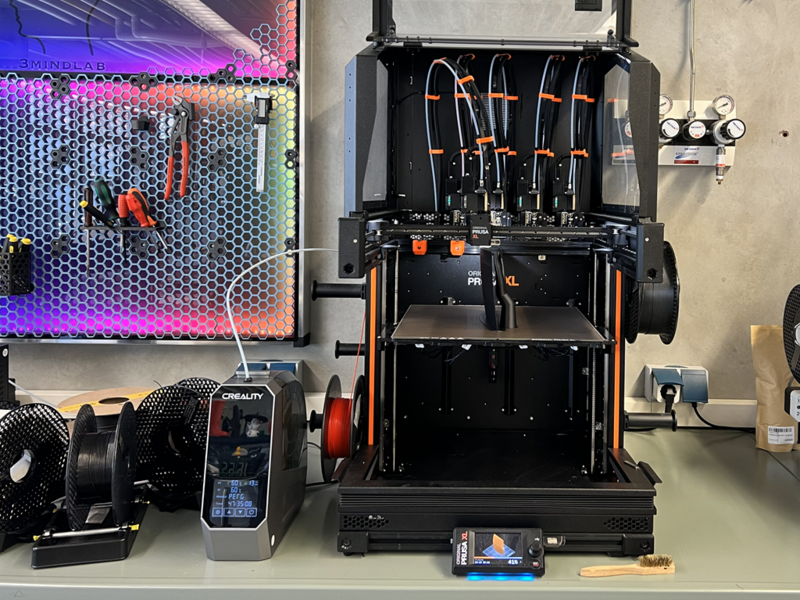
- build volume: 360 × 360 × 360 mm
- layer thickness: approx. 0.05 to 0.30 mm
- manufacturing principle: FFF
- kinematics: CoreXY
- genuine multi-tool solution with no filament changeover losses
- five independent print heads for multi-material and multi-colour parts without contamination
- a sealable build volume enables stable processing of high-temperature engineering materials such as ABS, PA or PPS
- large build volume for functionally integrated assemblies in a single print
- high efficiency in series production through parallel tool utilisation
- robust architecture for continuous use in product development
Creatbot D600 pro – Large-format printer
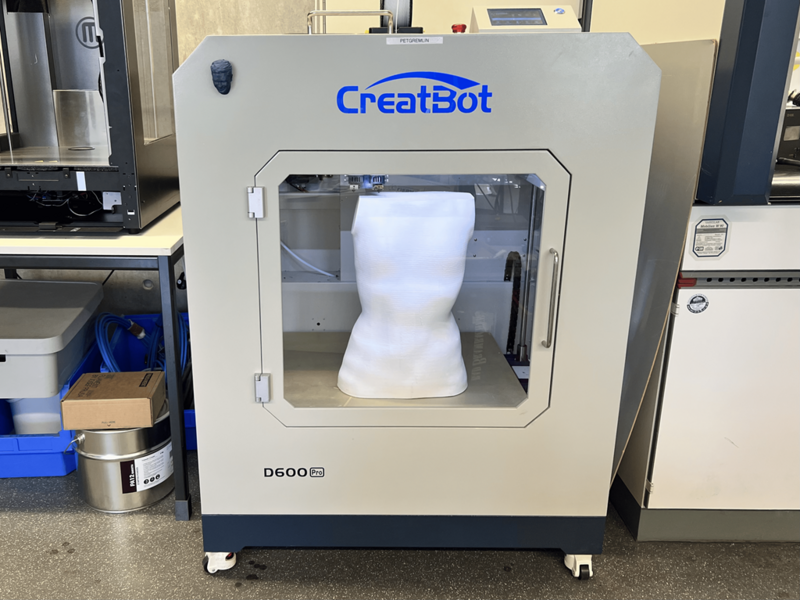
- build volume: 600 × 600 × 600 mm, optionally slightly reduced for dual extrusion
- layer thickness: minimum approx. 0.1 mm, designed for large-format, functional components
- manufacturing principle: FFF
- kinematics: Cartesian with linearly guided axes and servo-controlled drives
- dual extruder with two large nozzles (0.6 mm and 0.8 mm), ideal for high material flow
- high-temperature hotend up to 420 °C enables the processing of engineering polymers such as PC, nylon or fibre-reinforced materials
Student’s DIY project: 3D printer
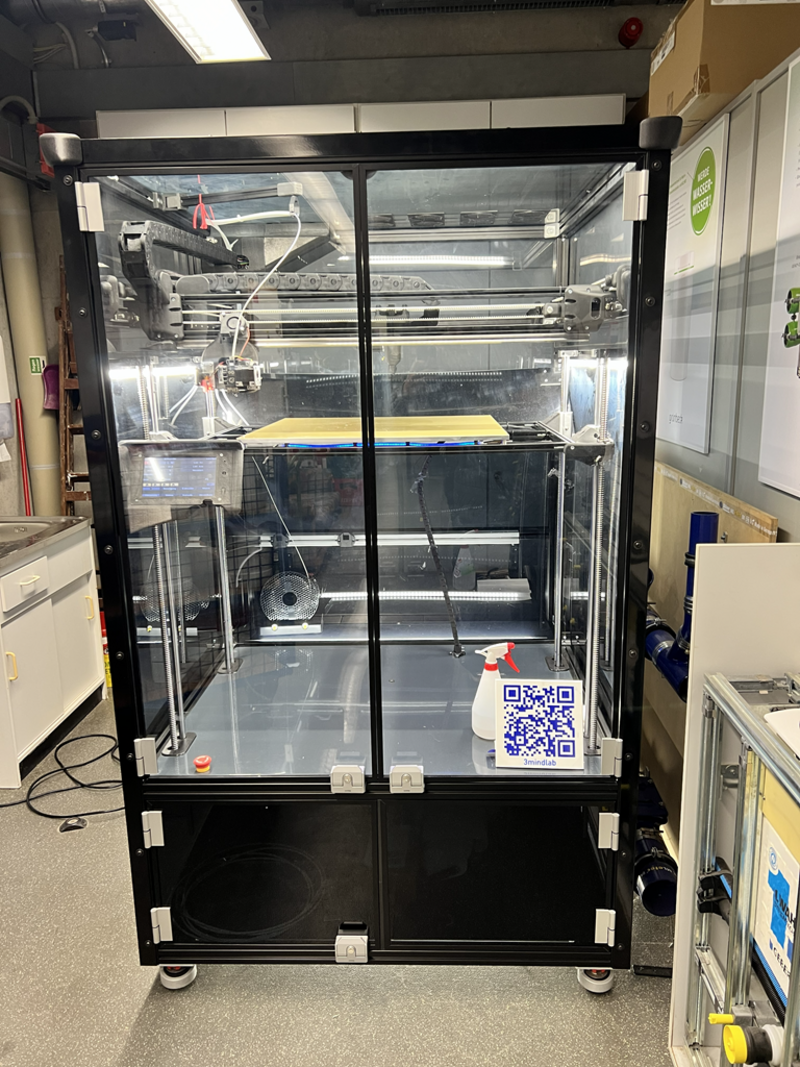
- build volume: 600 × 600 × 700 mm
- layer thickness: minimum approx. 0.1 mm, designed for large-format, functional components
- manufacturing principle: FFF
- kinematics: Cartesian with linearly guided axes
- available to all students at the university
- calibrated for conventional materials such as PETG and PLA
Filament extrusion machine for granules or recycled material
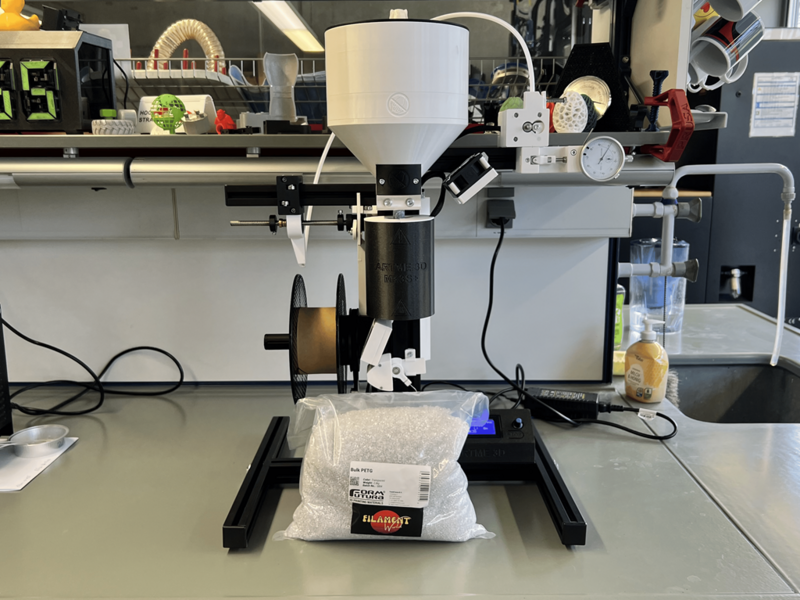
- extrusion machine for the production of recycled filaments or small injection-moulded components
- direct use of plastic granules or recycled waste
- sustainability benefits through the recycling of production waste, enabling closed-loop material cycles
- adjustable process parameters for the precise adjustment of different polymers
- capability to adapt to different filament diameters
Formlabs Form 2
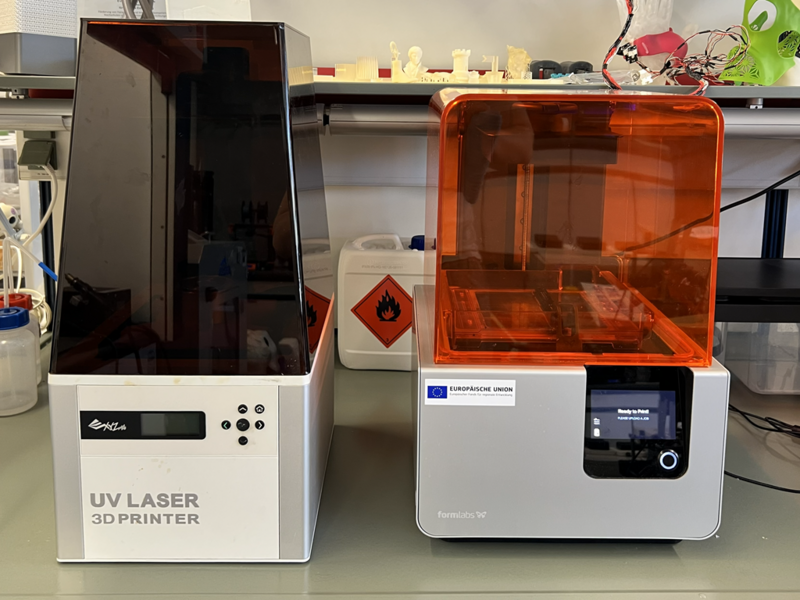
- build volume: 145 × 145 × 175 mm
- layer thickness: approx. 0.025 to 0.10 mm
- manufacturing principle: SLA (stereolithography)
- proven SLA technology for very high surface finish and detail resolution
- closed material cycle with validated resins for reproducible results
- easy to operate with automated resin handling
- ideal for precision prototypes, dental and medical technology
- consistent print quality thanks to controlled exposure processes
Workplaces involving SolidWorks
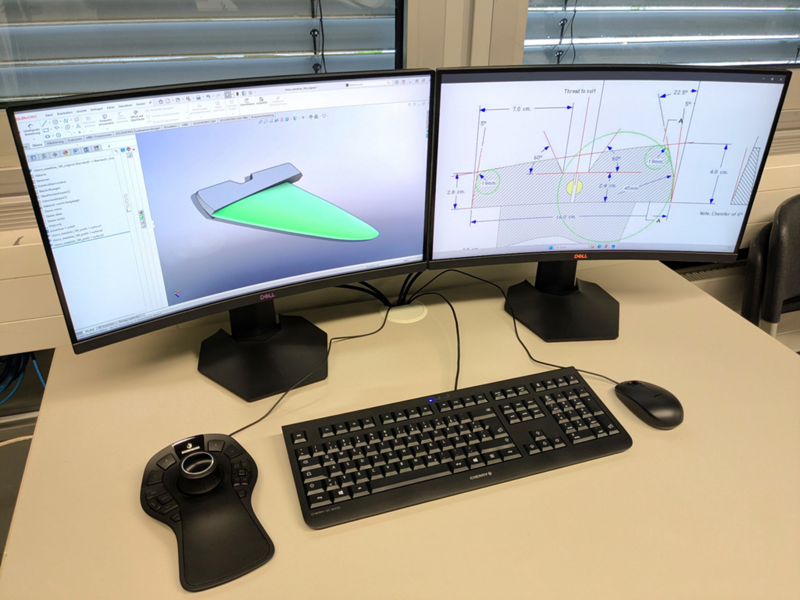
- industry standard for parametric 3D design and assembly modelling
- integrated simulation tools for structural analysis, fluid flow and motion
- high compatibility with common CAM systems
- efficient generation of drawings and manufacturing documentation
- extensive libraries of off-the-shelf and standard parts
Workplaces with Freeform Plus and a haptic device
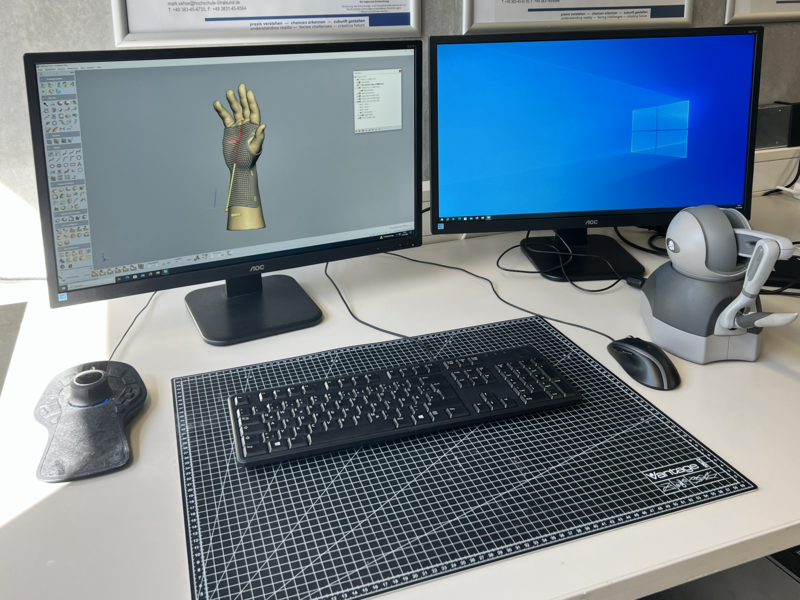
- intuitive, haptic modelling for organic and complex geometries
- direct force feedback enables precise digital sculpting
- particularly suitable for medical applications and custom orthoses
- seamless integration into existing CAD and AM workflows
- significant time savings when creating free-form models