
The piston engines and thermodynamics laboratories are designed to provide practical instruction in fundamental engineering concepts in the field of energy and heat conversion. They enable theoretical relationships to be clearly understood through experimental investigations. In particular, energy conversion processes can be demonstrated and analysed under real-world conditions. Furthermore, the laboratories offer the opportunity to conduct investigations into heat transfer processes and systematically record the factors influencing them. In this way, they make a significant contribution to the understanding of thermodynamic processes and to the safe handling of piston-engine-based systems in both research and teaching.

Please note: Once you watch the video, data will be transmitted to Youtube/Google. For more information, see Google Privacy.
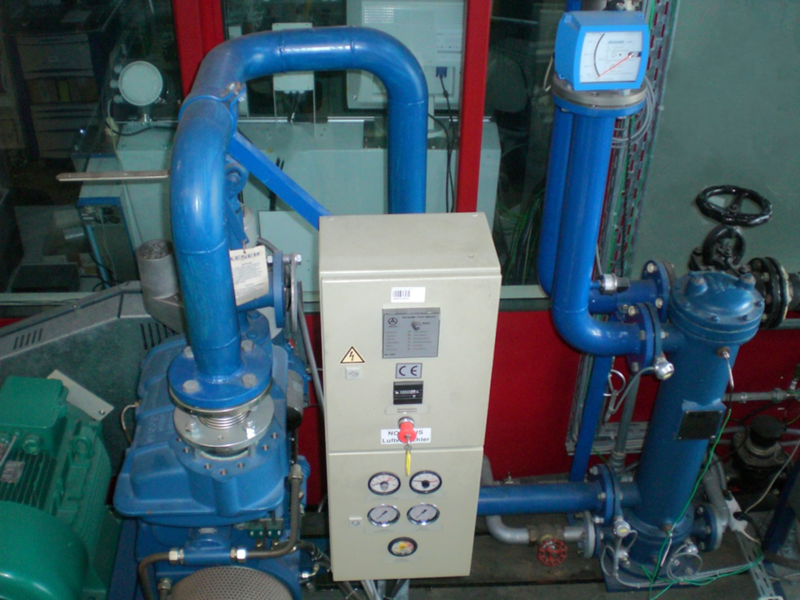
HATZ 1D90Z
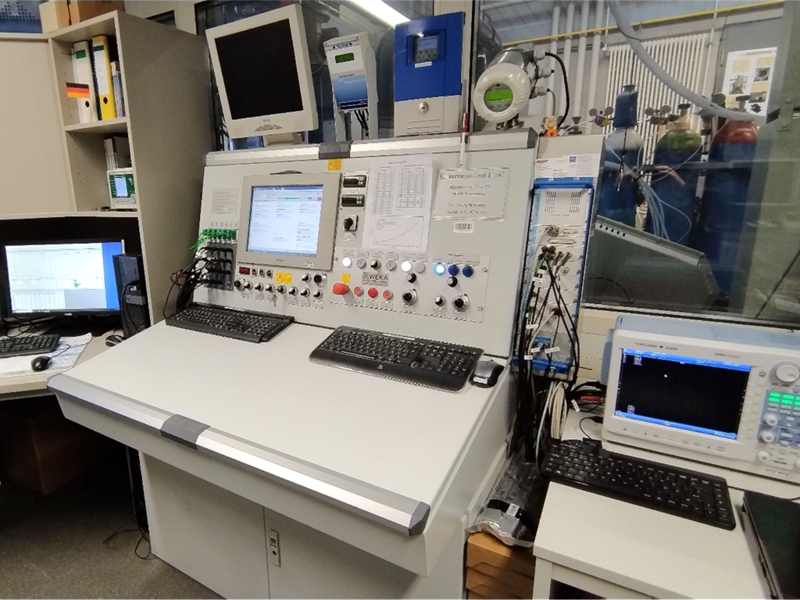
- air-cooled industrial four-stroke diesel engine
- combustion system: direct injection
- number of cylinders: 1
- rated power of 11.2 kW at 3000 min⁻¹
- torque of 40.7 Nm at 1500 min⁻¹
- bore / stroke: 104 mm / 85 mm
- displacement: 722 cm³
- compression ratio of 20.5:1
- average piston speed of 8.5 m/s at 3000 min⁻¹
Briggs & Stratton IntekPro206
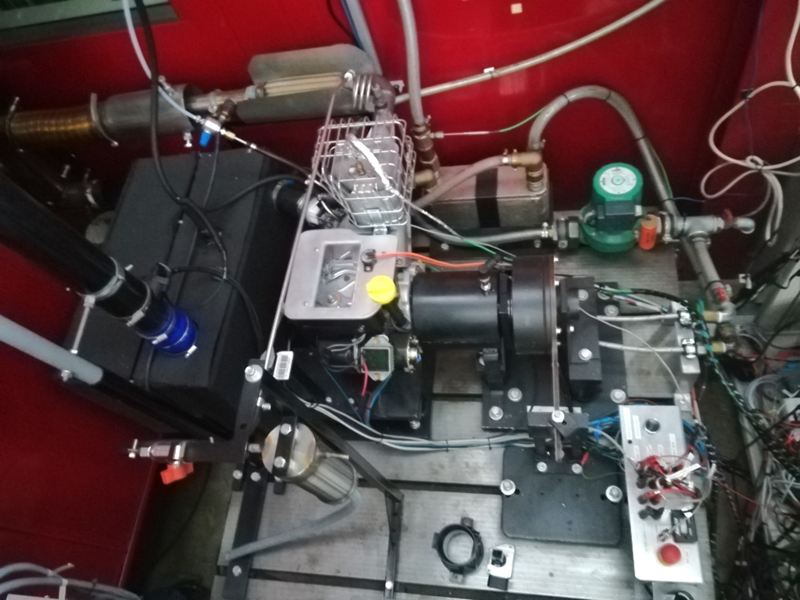
- air-cooled industrial four-stroke petrol engine
- fuel mixture formation: electronic carburettor
- number of cylinders: 1
- rated power: 4 kW at 3000 min⁻¹ / 4.6 kW at 3600 min⁻¹
- bore / stroke: 68 mm / 55 mm
- displacement of 206 cm³
- compression ratio of 8:1
- average piston speed of 5.5 m/s at 3000 min⁻¹ / 6.6 m/s at 3600 min⁻¹
WTZ FM16/24 ‘Norbert’
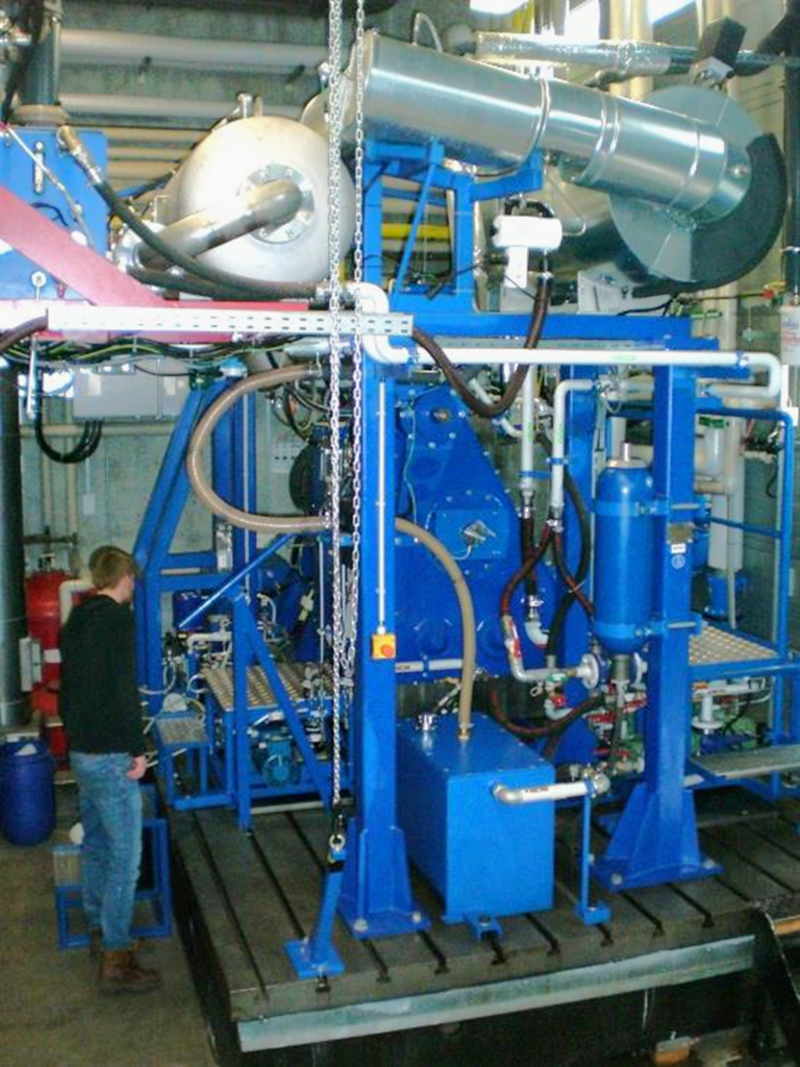
- single-cylinder research engine
- water-cooled four-stroke diesel engine
- combustion system: direct injection
- number of cylinders: 1
- rated power of 110 kW at 1200 min⁻¹
- bore / stroke: 160 mm / 240 mm
- displacement of 4.83 L
- compression ratio of 16.1:1 (nominal)
- average piston speed of 9.6 m/s at 1200 min⁻¹
- supercharger (oil-free screw type): Atlas Copco ZR 90-10.4VSD
- max. boost pressure: 6 bar(a)
- intercooler temperature (adjustable) of 30–80 °C
- injection system: PLD, max. 1200 bar